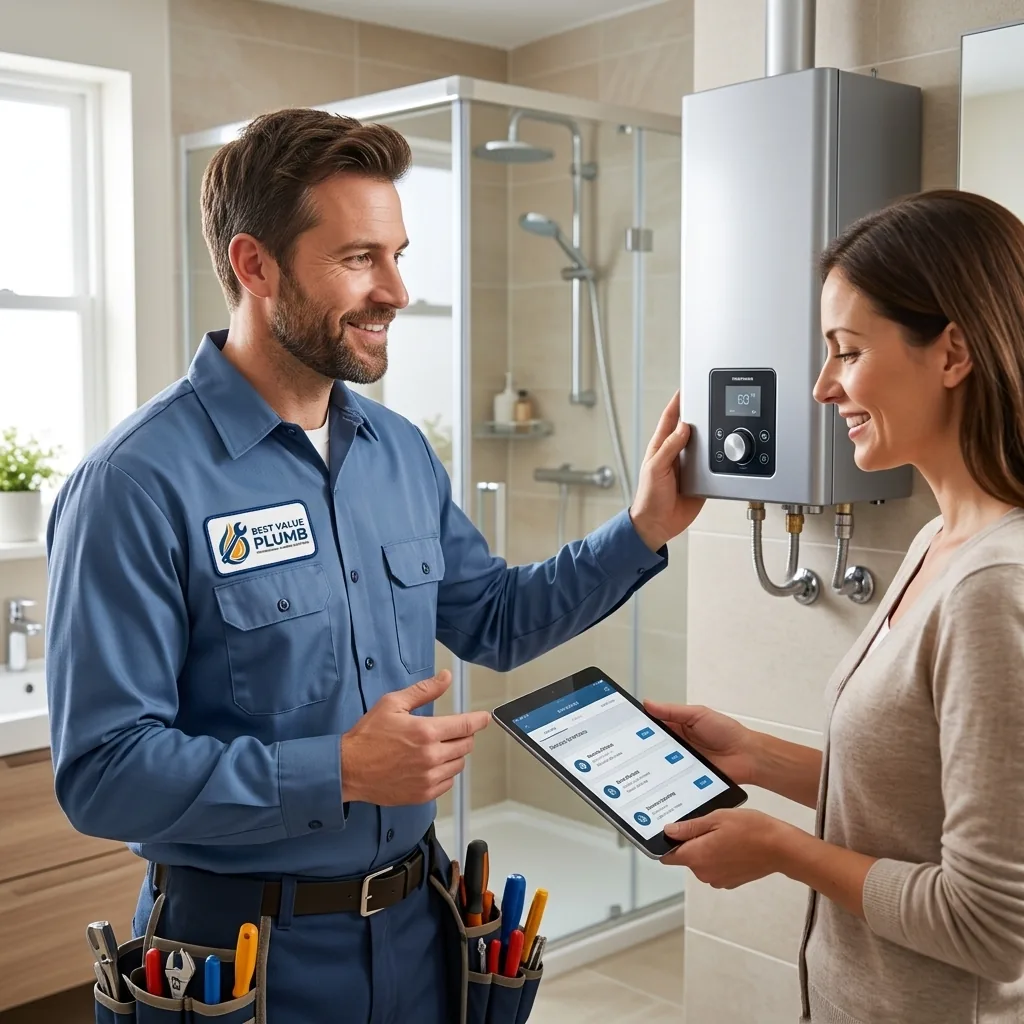
This annual plumbing inspection checklist walks you through every fixture, pipe, and appliance worth checking once a year. Most plumbing disasters do not start as disasters. They start small: a slow drip under a sink, a worn toilet flapper, sediment building in the water heater, or a bulging washing machine hose. By the time any of these announces itself, the damage — and the bill — is far bigger than it needed to be.
An annual plumbing inspection is the simplest way to catch all of that early. You do not need special tools or training: just a flashlight, an hour of your time, and this room-by-room checklist. Here is what to look at, what it tells you, and when to bring in a professional. All you need for the walkthrough:
- A flashlight for under sinks and behind toilets.
- Food coloring for the toilet leak test.
- A bucket for the water heater drain check.
- A water pressure gauge that threads onto a hose spigot.
1. 🚰 Under Every Sink: Kitchen and Bathrooms
With a flashlight, check under each sink: feel supply connections and shutoff valves for moisture, and look for stains, warped cabinet flooring, or musty smells — signs of a long-running slow leak. Run the faucet and watch the drain connections and the P-trap while water flows; drips often only show up under pressure.
Check the disposal's mounting and discharge connections, and confirm the dishwasher drain hose still has its high loop. A dry paper towel wiped along connections reveals dampness instantly.
2. 🚽 Toilets: Catch the Silent Leaks
Toilets can waste huge amounts of water invisibly. Test: add food coloring to the tank, wait 15 minutes without flushing, and check the bowl. Color in the bowl means the flapper leaks.
Check the base for rocking, floor staining, or sewer odor — signs of a failing wax ring — and inspect the supply line and shutoff valve for corrosion or drips. If you find a leak you cannot trace, our leak detection and repair team can track it down before it damages the subfloor.
3. 🔥 Water Heater: Flush and Test
Sediment builds up in every tank heater, reducing efficiency and lifespan. Yearly, drain a few gallons into a bucket — rusty or gritty water means a fuller flush is overdue. While you are there, lift the lever on the temperature-and-pressure relief (TPR) valve briefly to confirm water flows and the valve reseats; if nothing comes out or it keeps dripping, the valve needs replacement.
Check the base for rust or moisture and note the unit's age on its label. Heavy sediment or an aging tank deserves a water heater professional's service — maintenance beats emergency replacement.
4. 🧺 Washing Machine Hoses and Outdoor Spigots
Pull the washer out to inspect hoses for bulges, cracks, brittleness, or corroded connections, and check the wall and floor behind it for dampness. Replace old rubber hoses with steel-braided lines before they fail.
Outside, run each spigot and check for leaks at the handle and wall entry. A constant drip or weeping pipe wastes water and can damage siding and framing — in Knoxville, check after winter.
5. 💪 Main Shutoff Valve and Water Pressure
Everyone in the home should know the main shutoff's location. Test it yearly: turn it off, confirm a faucet stops, then reopen it. A stuck or corroded valve that will not fully close should be replaced.
While you are at it, check your water pressure with an inexpensive gauge threaded onto an outdoor spigot. Persistently high pressure stresses supply lines, appliance valves, and fixture cartridges throughout the house. If readings are consistently high, a pressure-reducing valve — installed by a plumber — protects everything downstream.
6. 👨🔧 What a Professional Inspection Adds
A homeowner walkthrough catches visible problems; a professional goes deeper with drain camera inspections, hidden leak detection, thorough water heater service, and pipe condition assessments. Pair your checklist with a professional visit — including a drain cleaning check if drains are slowing — and little will ever surprise you.
Frequently Asked Questions
How often should I have my plumbing inspected?
Do a homeowner walkthrough once a year using a room-by-room checklist, and consider a professional inspection on a similar schedule. Older homes and homes with prior plumbing issues benefit most from the professional visit.
What does a plumber check during an annual inspection?
A professional inspection typically covers supply lines, drains, toilets, the water heater, shutoff valves, water pressure, and visible piping, plus deeper checks like drain camera inspection and hidden leak detection.
How do I test my toilet for a silent leak?
Add food coloring to the toilet tank, wait about 15 minutes without flushing, then check the bowl. If color appears in the bowl water, the flapper is leaking and should be replaced.
Should I flush my water heater every year?
Yes, annual flushing removes sediment that reduces efficiency and shortens tank life. If the heater is old and has never been flushed, have a plumber assess it first rather than flushing it yourself.
Let Us Handle Your Yearly Inspection
A professional annual inspection catches the problems homeowners miss. Call Best Value Plumb to get connected with a local pro for your annual inspection.
📞 Call