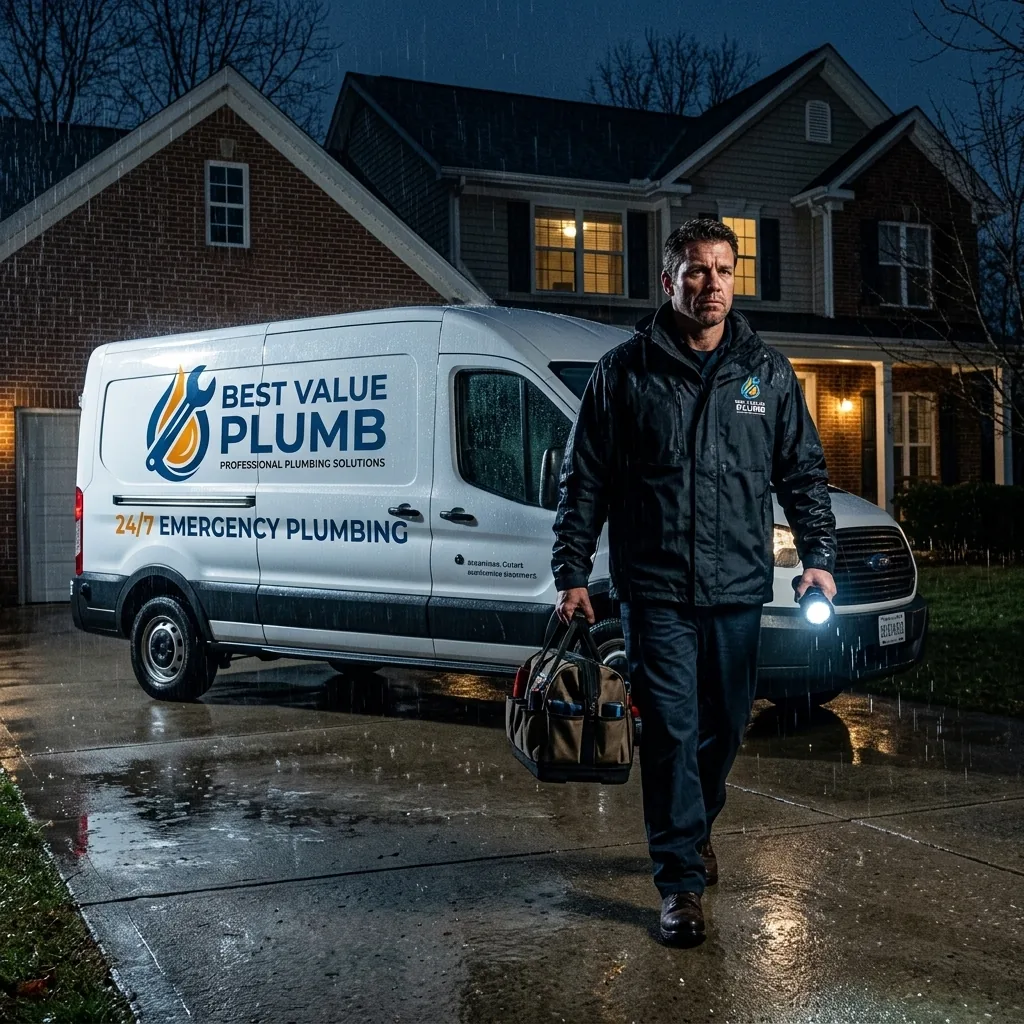
What you do in the minutes before the emergency plumber arrives can mean the difference between a mop-up and a major repair bill. A burst pipe, a failed water heater, or sewage backing up into your home is every homeowner's nightmare. Your first instinct might be to panic or to stand there watching the water spread. But the steps you take in the first fifteen minutes, while the plumber is on the way, can make an enormous difference in how much damage your home suffers.
This guide gives you a clear action plan for those critical minutes. The single most important step is knowing where your main water shutoff valve is before an emergency ever happens, so read this now, not at 2 a.m. with water on the floor. And remember: our 24/7 emergency plumbing team is ready to help any time, day or night.
1. 🚰 Shut Off the Water First
Stopping the flow of water is always step one. If the problem is at a single fixture, like a toilet or sink, look for the small shutoff valve on the supply line behind or beneath it and turn it clockwise. If water is coming from a burst pipe, a failed supply line, or anywhere you cannot isolate, go straight to the main shutoff valve for the whole house.
The main valve is often near the water meter, in a garage, utility room, crawl space, or along an exterior wall. It may be a round wheel handle or a lever. Turn a wheel clockwise or swing a lever perpendicular to the pipe. Take five minutes this weekend to find yours and make sure it actually turns. A valve that has seized from years of disuse will not help you in an emergency, and discovering that during a flood is the worst possible timing.
2. 🔥 Turn Off the Water Heater If It Is Leaking
If the water heater itself is the source of the leak, shut off its cold water supply valve, usually located above the unit. For a gas water heater, also turn the gas control to the pilot or off position. For an electric unit, switch off its breaker. Running a water heater with a low or empty tank can damage the unit, and mixing electricity with pooling water is never safe.
3. 🧺 Contain the Water and Protect Your Belongings
Once the water is off, slow the spread. Throw down towels, blankets, or mops to soak up standing water and create barriers that keep it from reaching other rooms. Place buckets under active drips. Move furniture, rugs, electronics, and important papers away from the wet area and up onto higher ground. The faster you get belongings out of the water, the more you save.
4. ⚡ Cut Power Near Standing Water
Water and electricity are a dangerous combination. If water is near outlets, appliances, or your electrical panel, turn off the affected breakers if you can do so safely from a dry location. Never step into standing water to reach a breaker box, and never touch electrical equipment while wet. If you are unsure, wait for the professionals.
5. 📸 Document the Damage for Insurance
Once things are under control, take photos and video of everything: the source of the leak, the water damage, and any damaged belongings. Capture wide shots and close-ups. This documentation is invaluable if you file a homeowners insurance claim. Do not throw away damaged items until you have photographed them and, ideally, checked with your insurer.
6. ☎️ What to Tell Us When You Call
When you call for emergency service, a few details help us help you faster: where the water is coming from, whether you were able to shut it off, whether any electrical hazards are involved, and your exact address. Stay calm, stay safe, and do not try to repair a burst pipe yourself. Shut it off, contain it, and let a licensed plumber handle the rest. If the situation involves a suspected hidden leak that suddenly got worse, mention that too so we bring the right detection equipment.
Frequently Asked Questions
Where is my main water shutoff valve?
It is often near the water meter, in a garage, utility room, crawl space, or along an exterior wall. It may be a round wheel handle you turn clockwise or a lever you swing perpendicular to the pipe. Find it before an emergency and confirm it turns freely.
Should I turn off my water heater during a leak?
If the water heater itself is leaking, shut off its cold water supply and turn off its energy source: set a gas unit to pilot or off, or switch off the breaker for an electric unit. This prevents damage to the heater and removes an electrical hazard.
What should I do about a sewage backup?
Avoid all contact with the water, keep people and pets away, and do not use chemical drain cleaners. Sewage carries harmful bacteria. Shut off water use in the home if you can do so safely, then call for emergency plumbing service right away.
How quickly can an emergency plumber respond?
Best Value Plumb offers 24/7 emergency plumbing service, including nights, weekends, and holidays. When you call, we will connect you with a local technician as quickly as possible and can talk you through shutting off your water while you wait.
Plumbing Emergency Right Now?
Do not wait for the damage to spread. Call Best Value Plumb any time — we'll connect you with a local plumber for emergency help, day or night.
📞 Call