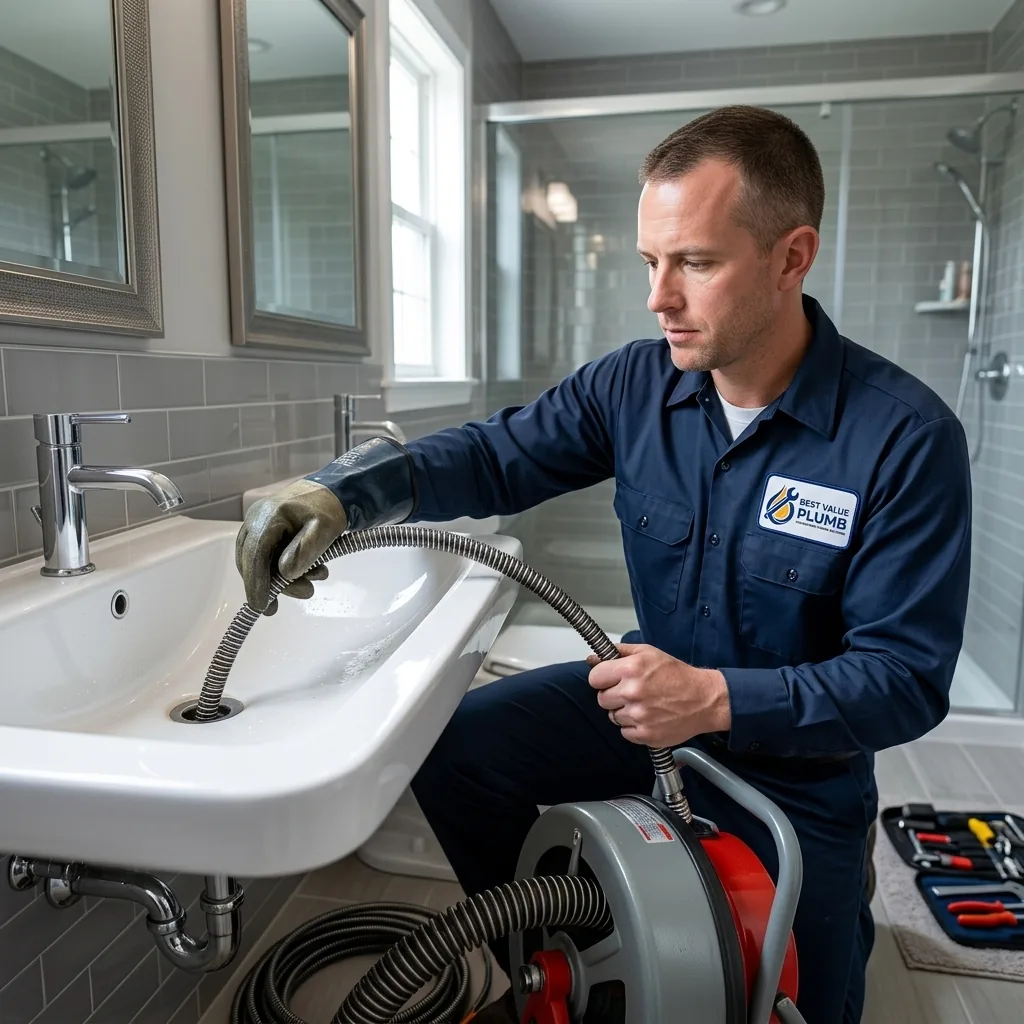
The DIY vs professional drain cleaning debate really comes down to one question: is this clog on the surface, or deep in the line? When a drain slows to a trickle, the first instinct is to fix it yourself. Plenty of clogs really are simple, and handling them at home can save you a service call. But not every drain problem belongs in DIY territory, and some of the most popular home remedies can actually damage your pipes or mask a bigger problem growing underground.
Here is an honest breakdown of what is safe to try yourself, what to avoid, and the warning signs that mean it is time to bring in a professional. When a clog beats your best efforts, our drain cleaning team can clear it properly without risking your pipes.
1. 🪠 The Plunger: Your First and Safest Tool
A good plunger is still the best first move for a slow or clogged sink, tub, or toilet. Use a cup plunger for flat drains like sinks and a flange plunger for toilets. Make sure there is enough water to cover the cup, seal it firmly over the drain, and use strong, steady plunges rather than wild splashing. The pressure change often dislodges hair, soap, and food clogs sitting near the drain opening.
Plunging is safe for virtually every type of pipe, which is why it should always come before any chemical product. If ten minutes of solid plunging changes nothing, move on rather than escalating to harsher methods.
2. 🐍 When a Drain Snake Makes Sense
A hand-cranked drain snake, also called an auger, can reach clogs a plunger cannot, usually a few feet down the line. Feed it gently into the drain, crank to work through the blockage, and pull back any debris. This works well for hair clogs in bathroom sinks and tubs.
The key word is gently. Forcing a snake, especially a powered one, can scratch porcelain, kink inside the pipe, or get stuck. If you meet solid resistance that will not budge, stop. That resistance might be a bend in the pipe, a broken section, or a clog far deeper than a hand snake can safely reach.
3. 🧴 Why Chemical Drain Cleaners Can Damage Pipes
Chemical drain cleaners promise a quick fix, but they work by generating intense heat and corrosive reactions inside your pipes. That is a real problem for older metal pipes, which can corrode and weaken, and for PVC, which can soften or warp under high heat. If the cleaner does not clear the clog, it just sits there eating at the pipe and the clog alike.
Chemicals are also dangerous for anyone who works on the drain afterward, including you and your plumber, and they can harm septic systems. A cleaner that fails to open the drain leaves you with the same clog plus a pipe full of caustic liquid. It is rarely worth the risk.
4. 🫧 The Baking Soda and Vinegar Reality Check
The baking soda and vinegar trick is all over home remedy lists, and it is harmless, but it is not the powerful clog-buster it is made out to be. The fizzing reaction is fun to watch, yet it has very little dissolving power against a real blockage of hair, grease, or soap. At best it can freshen a slow drain and loosen light buildup near the opening. It will not damage your pipes, so there is no harm in trying, but do not expect it to clear a stubborn clog.
5. 🚨 Slow Drains Everywhere: A Sign of Main-Line Trouble
One slow drain is usually a local clog. Several slow drains at once, gurgling toilets, water backing up into tubs or showers, or sewage odors are a different story. These point to a blockage in the main sewer line, which no plunger or home remedy can fix. Main-line problems need a professional with a camera inspection to see exactly what is going on, whether it is roots, grease buildup, or a collapsed section, followed by the right equipment like hydro-jetting to clear it safely. If you suspect a main-line issue, or you need pipe repair, call before it becomes a backup.
Related reading: How to Prevent Drain Clogs — simple habits that keep drains flowing in the first place.
Frequently Asked Questions
Is it safe to use a plunger on any drain?
Yes. Plunging is safe for sinks, tubs, showers, and toilets and for every common pipe material. Use a cup plunger for flat drains and a flange plunger for toilets, and make sure the cup is sealed over the drain with water covering it.
Do chemical drain cleaners really damage pipes?
They can. Chemical cleaners work through intense heat and corrosive reactions that can corrode older metal pipes, soften PVC, and harm septic systems. If the clog does not clear, the chemicals sit in the pipe and keep attacking it, so they are best avoided.
Does baking soda and vinegar unclog drains?
Rarely. The fizzing reaction is harmless but has very little dissolving power against real blockages of hair, grease, or soap. It may freshen a drain or loosen light buildup near the opening, but it will not clear a stubborn clog.
When should I call a professional for a clogged drain?
Call a professional if plunging and a hand snake do not clear the clog, if the same drain keeps clogging, or if multiple fixtures are slow or backing up at once. Those are signs of a deeper or main-line problem that needs camera inspection and professional equipment.
Clog That Won't Budge?
Skip the chemical cleaners and let a professional clear it safely. Call Best Value Plumb today and we'll connect you with a local drain cleaning pro.
📞 Call