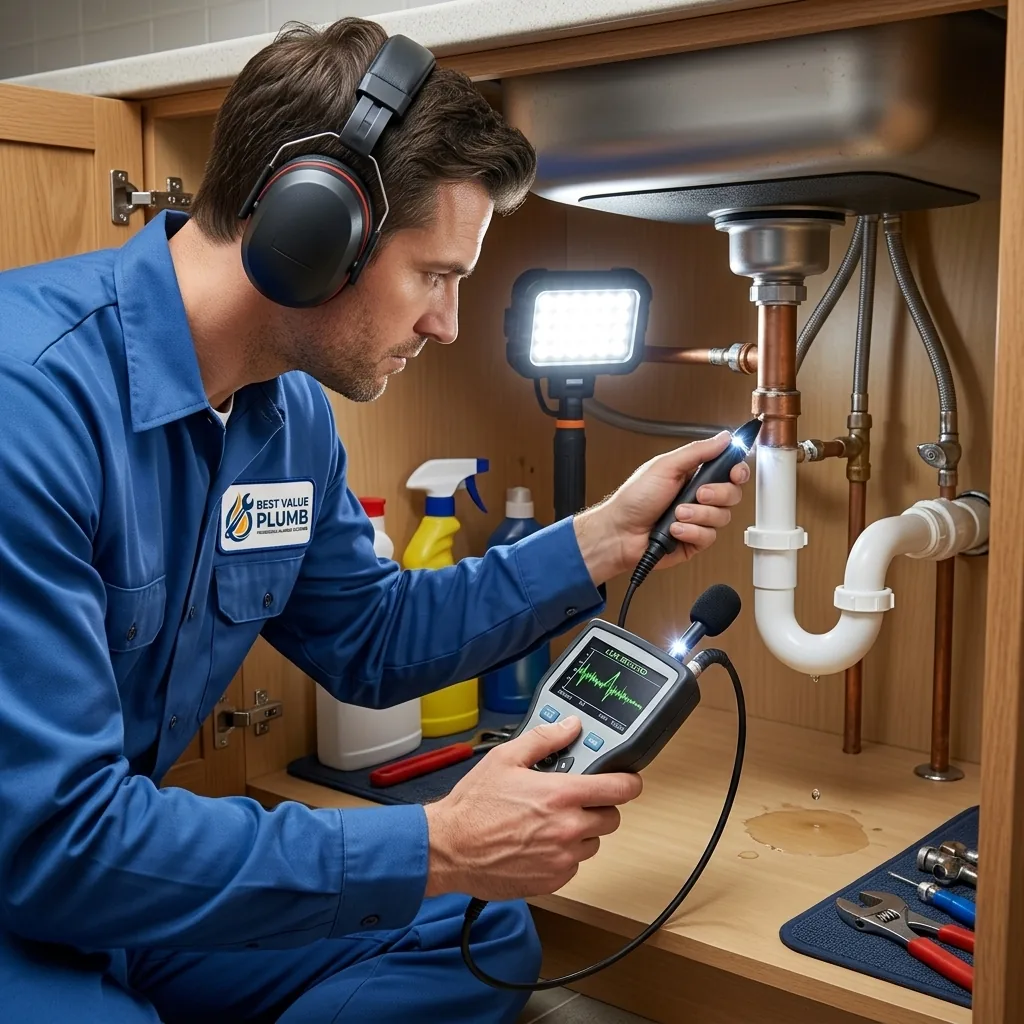
The hidden water leak signs that matter most are the subtle ones: a musty smell, a warm spot on the floor, or a water bill that creeps up for no reason. Not every water leak announces itself with a puddle on the floor. The most damaging leaks are the ones you cannot see: a pinhole in a pipe inside a wall, a slow drip under a slab, a supply line weeping behind a cabinet. Left alone, these hidden leaks soak framing, feed mold, and quietly drive up your water bill for months before anyone notices.
The sooner you catch a hidden leak, the smaller the repair. Below are the seven warning signs every homeowner should know, plus a simple test you can run today with nothing but your water meter. If any of them sound familiar, our leak detection and repair team can track the source down fast.
1. 💸 An Unexplained Spike in Your Water Bill
Your water usage does not change much month to month, so your bill should not either. If it jumps noticeably without a clear reason, like guests, a filled pool, or heavy lawn watering, a hidden leak is one of the first things to suspect. Compare the last few bills side by side and look at the usage numbers, not just the dollar amount. A steady climb in gallons used is a classic fingerprint of a leak.
2. 🧮 The Two-Hour Water Meter Test
This simple test can confirm a leak before you call anyone. Here is how to run it:
- Turn off every faucet, appliance, and irrigation system in the house. Nothing should be using water.
- Find your water meter, usually near the street or property line, and write down the reading.
- Wait two hours without using any water, then read the meter again.
- If the reading changed, water is moving somewhere in your plumbing, and you likely have a leak.
Some meters also have a small leak-indicator dial or triangle that spins when water flows. If it moves while everything is off, that tells the same story even faster.
3. 👀 Stains, Bubbling Paint, and Warped Surfaces
Brown or yellowish stains on ceilings and walls are the most visible clue that water is traveling where it should not. Paint or wallpaper that bubbles, peels, or feels soft to the touch means moisture is trapped behind it. On floors, look for warped boards, loose tiles, or laminate that is lifting at the edges. These signs often appear far from the actual leak, because water follows gravity and framing before it shows itself.
4. 👃 Musty Odors and Visible Mold
A persistent musty or earthy smell, especially in a bathroom, laundry room, or closet, often means moisture is feeding mold inside a wall or under flooring. You might spot mold itself as dark speckles along baseboards or grout lines. Mold can take hold quickly in warm, damp spaces, so treat a new musty smell as a reason to investigate, not just to light a candle.
5. 🔥 Warm Spots on the Floor
A patch of floor that feels warm underfoot, particularly on a tile or concrete slab, can indicate a hot water line leaking underneath. You may also notice the sound of running water when every fixture is off, or a water heater that cycles more often than it should. Slab leaks need professional equipment to confirm, so this is one sign to take seriously right away.
6. 🛠️ How Professionals Find Leaks You Cannot See
When the signs point to a hidden leak, a plumber does not just start opening walls. Pros use non-invasive tools like acoustic listening devices that pick up the sound of water escaping a pipe, moisture meters that map damp areas inside walls, and thermal imaging cameras that reveal temperature differences caused by hidden moisture. These tools let us pinpoint the leak with minimal disruption.
If a leak looks serious, or you cannot shut it off at a fixture, do not wait for business hours. Our 24/7 emergency plumbing team can stop the water and limit the damage any time of day or night.
Frequently Asked Questions
How can I tell if I have a hidden water leak?
Look for an unexplained water bill increase, stains or bubbling paint on walls and ceilings, musty odors, warped flooring, and the sound of running water when everything is off. The two-hour water meter test is the simplest way to confirm a leak before calling a professional.
What is the water meter test?
Turn off everything that uses water, record your meter reading, wait two hours without using any water, then read it again. If the reading changed, water is flowing somewhere in your plumbing, which points to a leak.
Can a small leak really cause mold?
Yes. Mold only needs moisture, warmth, and time. A slow hidden leak inside a wall or under flooring creates exactly those conditions, and mold can begin growing within days in a warm, humid environment. That is why hidden leaks should be found and fixed quickly.
Should I call a plumber or a mold company first?
Call a plumber first. The leak has to be found and stopped before any mold cleanup will last. Once the plumbing is repaired and the area is dried out, a mold remediation specialist can handle any remaining growth.
Suspect a Hidden Leak?
Do not wait for stains or mold to spread. Call Best Value Plumb today and we'll connect you with a local leak detection pro to find the source fast.
📞 Call