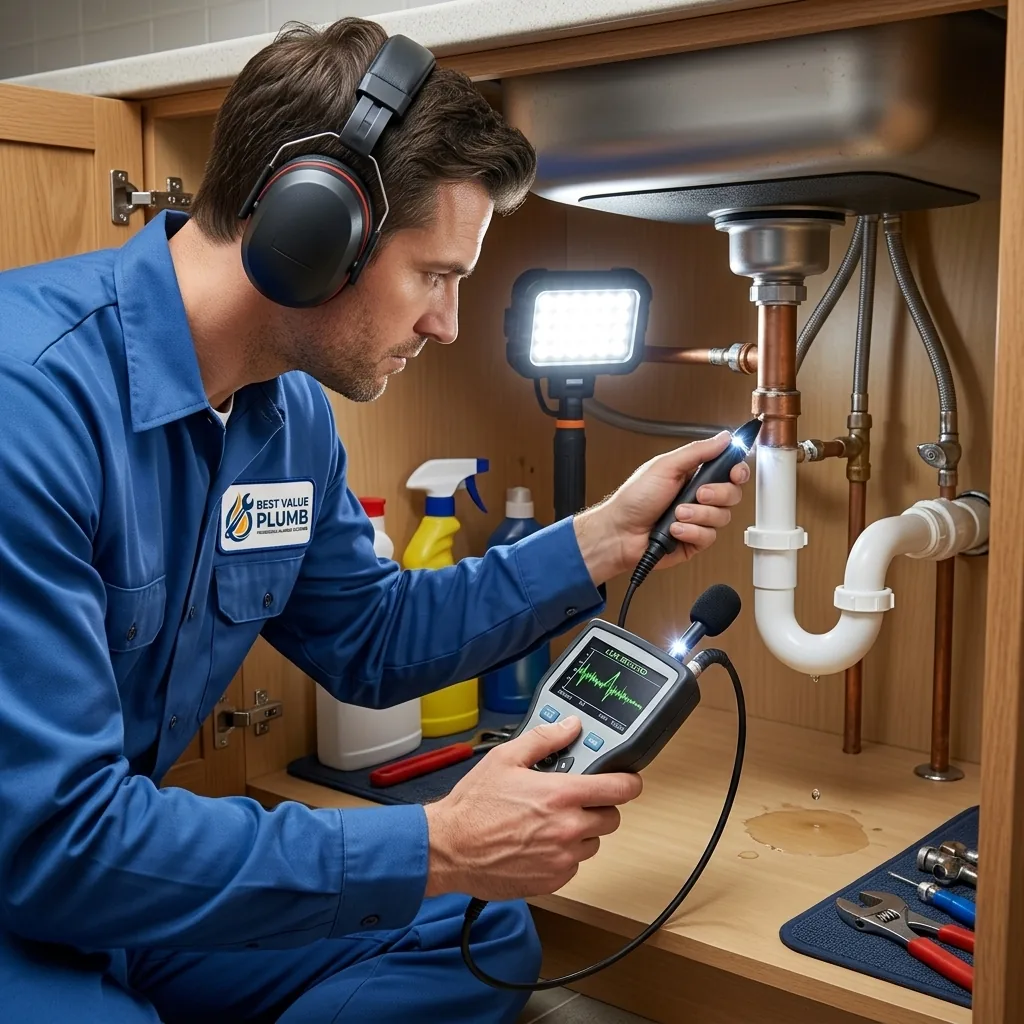
This guide to low water pressure causes and fixes starts with the simplest checks and works up to the ones that need a pro. There is nothing quite like stepping into a shower that barely trickles, or waiting forever to fill a pot at the kitchen sink. Low water pressure is one of the most common plumbing complaints we hear — and one of the most fixable, once you know what is causing it.
The trick is diagnosing correctly: a clogged aerator and a failing pressure regulator feel identical at the tap, but the fixes are worlds apart. Work through these causes simplest-first.
1. 🔍 Step One: Is It One Fixture or the Whole House?
Check several fixtures — kitchen sink, bathroom sink, shower, outdoor spigot. One weak fixture means a local problem: a clogged aerator, a dirty showerhead, or a supply issue under that sink.
Weak everywhere, including the spigot, means a system-wide issue: a valve, the pressure regulator, a hidden leak, or aging pipes.
2. 🚰 The Easiest Fix: Clogged Aerators and Showerheads
The aerator — the little screen at the tip of your faucet — catches mineral deposits and sediment over time until water can barely squeeze through. It is the most common cause of single-fixture low pressure, and the fix takes five minutes.
Unscrew the aerator (pliers with a cloth to protect the finish, if it is tight), tap out the debris, and soak the parts in white vinegar for an hour or so to dissolve mineral scale. Rinse, reassemble, and test. While you are at it, unscrew the showerhead and soak it in vinegar too — or replace it if the nozzles are permanently clogged. If pressure returns, you are done.
3. 🔧 Check Your Valves — Including the Pressure Regulator
Two valves deserve your attention. First, the main shutoff valve where water enters your home. If it was partially closed during a repair and never fully reopened, your whole house will suffer. Make sure it is open all the way.
Second, the pressure regulator valve (PRV), the bell-shaped device on the main line. It keeps incoming pressure at a safe, steady level; when it fails, pressure can drop — or spike dangerously high, stressing pipes and appliances. An aging, misbehaving PRV is a strong replacement candidate, and that is a pro job.
4. 💧 Could a Hidden Leak Be Stealing Your Pressure?
Escaping water reduces pressure everywhere else. Suspect a leak if pressure dropped suddenly or your water bill climbed without explanation. Look for damp spots, warm floors, the sound of running water with everything off, or a meter that moves with all fixtures shut.
The meter test is simple: turn off every tap and water-using appliance, note the meter reading, wait an hour without using water, and check again. If it moved, water is going somewhere it should not. That is the time to call for professional leak detection and repair — hidden leaks only get worse, and the water damage they cause costs far more than the repair.
5. 🧱 Aging Pipes Can Choke Your Water Flow
In older homes with galvanized steel plumbing, corrosion builds up inside the pipes year after year, gradually narrowing them until water can barely pass. The telltale pattern: pressure that has been declining slowly for years, sometimes with rusty-colored water when you first turn on a tap.
No aerator cleaning or valve adjustment will fix pipes that are corroded shut from the inside. When the whole system is restricted, the real solution is replacing the old piping — a whole-home repipe with modern PEX or copper restores full flow and ends the cycle of pinhole leaks. Our pipe repair team can assess whether your pipes are the culprit and lay out your options honestly.
6. 🧰 What to Try Yourself vs. When to Call a Plumber
Safe DIY territory: cleaning aerators and showerheads, checking that shutoff valves are fully open, and running the water-meter test. These cost nothing and solve a surprising share of pressure complaints.
Call a pro when the whole house is weak and simple checks fail, when you suspect the regulator, when the meter test points to a leak, or when aging pipes are likely. A plumber with a pressure gauge can measure your system at multiple points and pinpoint the restriction.
Frequently Asked Questions
What is normal water pressure for a home?
Most homes are comfortable with pressure in the typical residential range your local code targets. If your pressure feels noticeably weak at every fixture, a plumber can measure it with a gauge and tell you whether it is actually low or just feels that way.
Can a water softener cause low water pressure?
It can if the unit is undersized, clogged with sediment, or stuck in a regeneration cycle. Try putting the softener in bypass mode temporarily. If pressure returns, the softener needs service.
Why is my hot water pressure low but cold water fine?
That points to the water heater or the hot-water lines: sediment buildup in the tank, a failing shutoff valve on the heater, or corrosion in older hot-water piping. Start by checking the valve on top of the heater is fully open.
How do I test my home's water pressure?
Screw a water pressure gauge onto an outdoor hose spigot, make sure no water is running inside, and turn the spigot on fully. The gauge gives you a baseline reading you can share with your plumber.
Tired of Weak Water Pressure?
Stop guessing and get a real diagnosis. Best Value Plumb will connect you with a local plumber to find the cause of your low pressure — discuss pricing with them before work begins. Call today to schedule your visit.
📞 Call