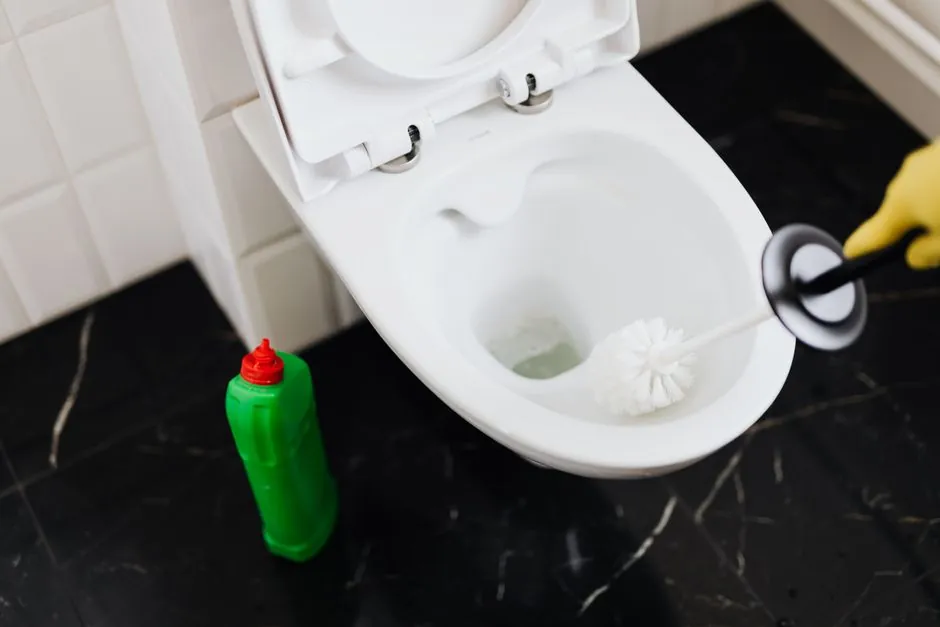
A clogged toilet with no plunger in the house is one of those moments that tests your resourcefulness. The good news: a plunger is just one tool, and several household items plus a little patience can clear most clogs without it.
The bad news: not every clog should be forced. Below are 7 methods ranked roughly from fastest to last resort — with clear guidance on when to stop and call a professional.
1. 🧴 Dish Soap + Hot Water (Start Here)
Squirt a generous amount of dish soap (about half a cup) into the bowl and let it sit for 15–20 minutes. The soap lubricates the clog and the pipe walls. Then pour in a bucket of hot — not boiling — water from waist height. The combination of lubrication, heat, and gravity clears soft clogs (too much paper, light waste) surprisingly often.
Why not boiling water? Boiling water can crack porcelain. Hot tap water is safe; a rolling boil is not. Wait 10 minutes between attempts and never let the bowl get close to overflowing.
2. 🪣 The Bucket Flush
Sometimes the clog just needs more water pressure than a single flush provides. Fill a large bucket with hot water and pour it rapidly into the bowl from about waist height. The force mimics a stronger flush and can push a soft clog through.
This works best on partial clogs where water still drains slowly. If the bowl is already full to the brim, bail some water out first — adding more to a full bowl only risks an overflow.
3. 🧷 The Wire Hanger Snake
Straighten a wire coat hanger, leaving a small hook at the end, and wrap the hook in a rag secured with tape (this protects the porcelain from scratches). Feed it into the drain and gently work it to break up or snag the clog.
Go slowly and never force it. A hanger can reach only the first few inches of the trap — enough for paper-heavy clogs near the bowl, but not for anything deeper. If you meet solid resistance, stop: you are likely hitting the trap bend, not the clog.
4. 🧪 Baking Soda + Vinegar
Pour one cup of baking soda into the bowl, followed by two cups of white vinegar. Let the fizzing reaction work for 20–30 minutes, then follow with hot (not boiling) water.
Be honest about expectations: this is the gentlest method on the list and works best on minor, slow-drain clogs. It will not dissolve anything solid. Think of it as a first attempt, not a miracle cure — and never mix this with chemical drain cleaners.
5. 🪠 The Plastic Bottle Plunger
Cut the bottom off a large plastic bottle, keep the cap on, and use the bottle mouth like a plunger: seat it over the drain hole and pump firmly. The trapped air creates pressure similar to a real plunger.
It is improvised and less effective than the real thing, but in a pinch it generates meaningful pressure. Wrap the cut edge with tape to protect the bowl finish.
6. 🐍 The Closet Auger (Best DIY Tool)
A closet auger (toilet snake) is the correct tool for the job and costs $25–$40 at any hardware store. Feed the cable into the bowl, crank the handle, and let the auger head break through or retrieve the clog. It reaches past the trap where hangers cannot.
If you own a home, owning a closet auger is cheaper than one emergency visit. But if the auger meets a hard stop it cannot pass — or if you retrieve nothing and the toilet still will not flush — the blockage is further down the line.
7. 🛑 When to Stop and Call a Plumber
Stop DIY and call immediately if: multiple fixtures are backing up (sinks, tub, toilet together — that signals a main line problem), sewage is coming up through drains, the toilet overflows despite your efforts, or you suspect a non-flushable object (toy, wipe, sanitary product) is lodged deep.
Repeated plunging or snaking on a main-line clog can push sewage into other fixtures. Our running toilet guide covers the other common toilet failures, and gurgling toilets often share the same root cause. For clogs that keep returning, professional drain cleaning clears what household methods cannot.
Frequently Asked Questions
Will dish soap and hot water really unclog a toilet?
Often, yes — for soft clogs made of toilet paper and light waste. The soap lubricates the clog and pipe walls while hot water and gravity push it through. It won't work on solid objects or deep line blockages.
Is it safe to pour boiling water in a toilet?
No. Boiling water can crack porcelain and damage the wax ring seal. Use hot tap water instead — hot enough to help, not hot enough to thermal-shock the bowl.
Can I use Drano in a clogged toilet?
Avoid it. Chemical drain cleaners generate heat that can crack porcelain, damage the wax seal, and create a hazardous splash risk. They also make a future plumber's job more dangerous.
How do I know if the clog is in the main sewer line?
When multiple fixtures misbehave at once — toilet plus tub or sink backing up, gurgling in other drains when you flush — the blockage is almost certainly in the main line. That is a professional job, not a DIY one.
Clog Won't Budge?
Most toilet clogs clear with one of these methods — but recurring clogs, multiple backed-up fixtures, or sewage odors mean the problem is bigger than the bowl. Call Best Value Plumb and we'll connect you with a local plumber in Mary Esther, Oakland Park, or Knoxville.
📞 Call