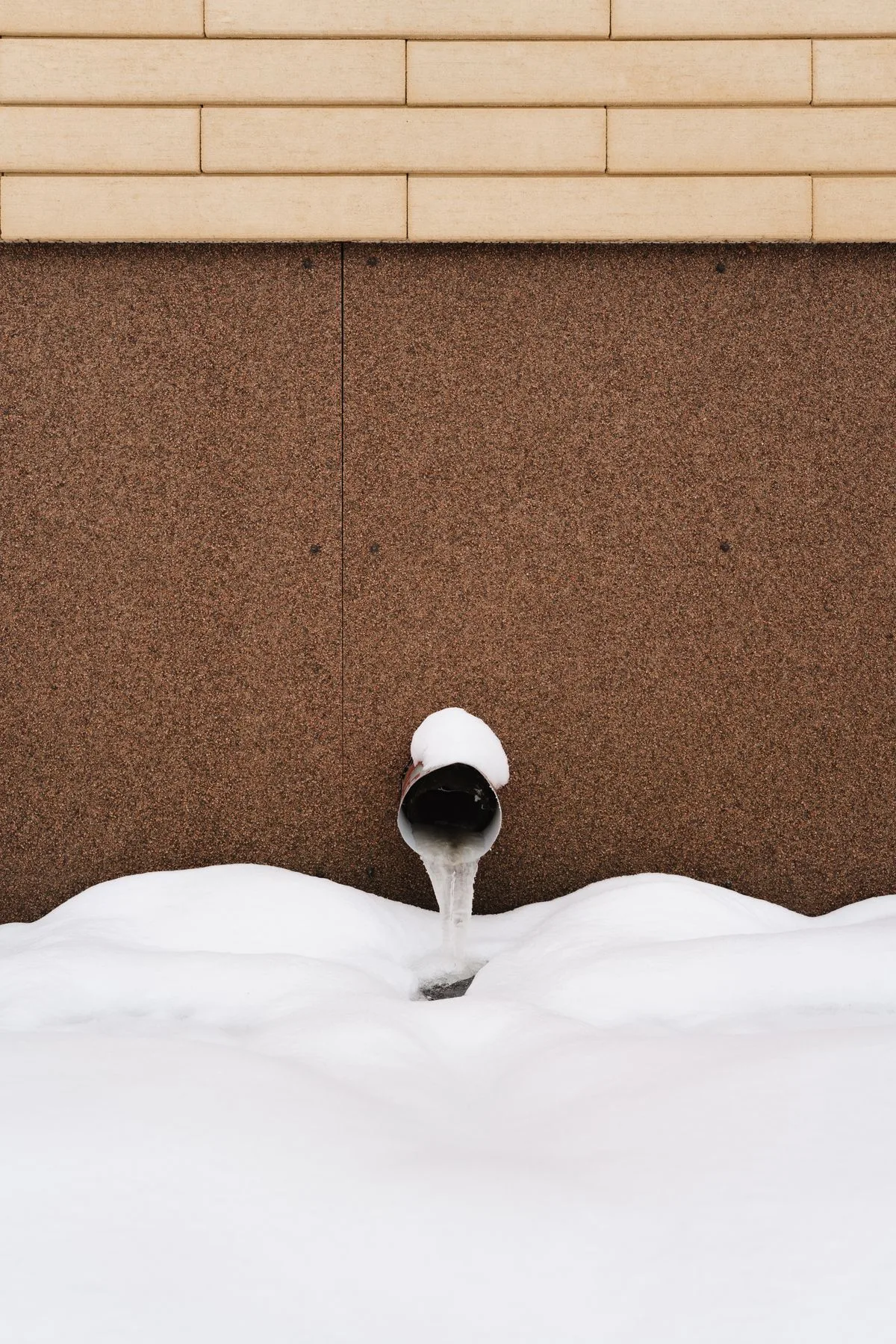
Frozen pipe prevention in Knoxville starts on an ordinary Tuesday afternoon in January, when the thermometer on your Knoxville porch reads 63°F. The kids have the back door open, the dog is sunning herself on the deck, and nobody in the house is thinking about winter. Then the evening forecast lands: an arctic front is dropping through Tennessee tonight, the low is 14°F, and wind will gust through the gaps in your crawlspace vents from midnight until dawn. By 2 a.m., the half-inch copper line feeding your kitchen sink — a line that has been sitting in a 60-degree crawlspace all day — is sitting in 18-degree air. By 6 a.m., when the ice plug gives way, it is not a drip you hear. It is water hitting the underside of your subfloor at full household pressure.
This is the classic Knoxville pipe burst, and it happens several times every winter across Knox County. Tennessee homes are not built like Minnesota homes. A huge share of Knoxville houses sit on vented crawlspaces rather than full basements, which means supply lines often run through spaces that are only a few degrees warmer than the outside air. Add the region's signature temperature whiplash — 60°F at lunch, 15°F by 4 a.m. — and pipes never get the gradual acclimation they would in a steadily cold climate. Attics, garages, and exterior-wall cavities hold more exposed pipe than most homeowners realize. The good news is that nearly every cold-snap burst is preventable with about two days of warning and roughly $30 to $60 in supplies. This guide walks you through exactly what to do, in what order, so your pipes survive the next front.
Frozen Pipe Prevention in Knoxville: Why Cold Snaps Burst Pipes
Water freezes at 32°F, but pipes do not burst the instant ice forms. When water in a section of pipe freezes, it forms an ice plug that blocks the line. The still-liquid water trapped between that plug and a closed faucet has nowhere to go, and as more ice forms, pressure in that trapped section climbs fast — laboratory tests have measured well over 2,000 psi in a frozen residential line, while most household copper and PEX is rated for a few hundred. The pipe splits at a weak point upstream of the plug: a fitting, an elbow, or a section thinned by years of water chemistry. The flood then waits until the ice melts, which is why so many Knoxville homeowners discover the damage at 6 or 7 a.m., when the house warms and the line thaws.
Three features of East Tennessee homes make this sequence more likely. First, the vented crawlspace: in a hard freeze it can run within 5 to 10 degrees of the outdoor temperature, so supply lines strapped to floor joists are effectively outdoor pipes. Second, sudden drops — a pipe carrying 65-degree water at dinner loses its residual warmth fast once flow stops overnight, and a 45-degree plunge in twelve hours gives no margin. Third, unconditioned add-ons: garage laundry hookups, attic runs to bonus-room baths, hose bibs, and kitchen lines in exterior-wall cavities. Walk your crawlspace before the season's first hard freeze to learn exactly where your pipe repair risk lives.
Your 48-Hour Cold Snap Checklist
When the forecast shows a hard freeze — generally 28°F or below for more than a few hours, or any low under 20°F — start this countdown. Each step is ordered so the most time-sensitive work happens first.
48 hours out: assess and supply up
- Walk your home and list every faucet on an exterior wall, every pipe in the crawlspace, attic, or garage, and every outdoor spigot. Write the list down; you will use it.
- Buy supplies: foam pipe sleeves ($3 to $8 per 6-foot stick at a hardware store — measure your exposed runs first), two to four outdoor faucet covers ($2 to $5 each), and pipe-seal tape or zip ties. A 25-foot roll of electric heat tape ($25 to $60) is worth it for one chronically cold run, such as a line to a garage laundry.
- Find your main water shutoff and make sure every adult in the house knows where it is. If the valve has not moved in years, exercise it gently now — discovering it is frozen shut during an active burst is a nightmare. If it will not turn, schedule a valve replacement before the deep freeze.
- Disconnect every garden hose from every spigot. A connected hose traps water in the bib and defeats even frost-free designs.
24 hours out: protect the exterior
- Install faucet covers on all outdoor spigots and close any crawlspace vents you can reach (reopen them after the snap passes).
- Slip foam sleeves over exposed pipes in the crawlspace, garage, and attic, butting them tightly and taping the seams. Elbows and tees need pre-formed elbow covers — bare fittings are the most common freeze point on an otherwise insulated run.
- If your home has an interior shutoff for hose bibs, close it and open the outside bib to drain the trapped water.
During the freeze: keep water moving and heat steady
- Drip the faucets on your list (details in the next section) — start when the temperature falls to about 28°F and keep it going until it is reliably above freezing during the day.
- Open cabinet doors under every sink on an exterior wall, including the kitchen and any bath on an outside wall, so warm room air reaches the pipes.
- Keep the thermostat at 55°F or higher, day and night, even if you are traveling. The heating bill for one cold weekend is $10 to $25; a burst-pipe claim averages $5,000 to $15,000 in water damage.
- If you will be away, do not set the heat lower to save money, and consider shutting the main off and draining the lines if the house will sit empty through a multi-day freeze.
Which Faucets to Drip — and Exactly How
Dripping works, but only if you drip the right faucets the right way. The goal is not to waste water; it is to keep a small, continuous flow through the sections of pipe most likely to freeze, because moving water must get significantly colder than 32°F before it ices over, and flow also relieves the pressure buildup that actually bursts pipes.
Drip every faucet served by a pipe that runs through an unconditioned space or along an exterior wall. In a typical Knoxville crawlspace home, that means the kitchen sink (almost always on an exterior wall), any bathroom on an outside wall, the laundry hookup if it is in the garage, and the faucet farthest from where water enters the house — that farthest fixture keeps water moving through the longest run. If you only remember one faucet, make it the farthest one from the main shutoff.
The stream should be about the width of a pencil lead — roughly 1/8 to 1/4 inch, a steady thin stream rather than individual drips. A slow drip-drip can still freeze in a truly cold run; a pencil-width stream will not. Run both hot and cold on each chosen faucet, because both lines run through the same cold spaces. Yes, this uses water: a pencil-width stream runs about 1 to 3 gallons per hour, or roughly 24 to 72 gallons over a full day. At Knoxville utility rates, that is on the order of $1 to $5 for the whole cold snap — against a burst-pipe repair and water-damage restoration that routinely runs $5,000 to $15,000, it is the cheapest insurance you will ever buy.
One more nuance for two-story homes: drip an upstairs faucet too. Heat rises, so upstairs lines are safer, but the vertical run feeding them passes through cold wall cavities, and an upstairs drip protects the whole column.
Open Cabinets and Keep Heat Consistent
Pipes inside exterior-wall cavities freeze because the wall cavity is cold and the room side is warm — and a closed cabinet door puts the pipe on the cold side of that divide. Opening the doors under sinks on exterior walls lets 68-degree room air circulate around the trap and supply lines. Move cleaning chemicals and anything a child or pet could reach to a high shelf first, then leave the doors open for the duration of the freeze.
Keep the thermostat steady at 55°F minimum, and skip the nighttime setback during a hard freeze — setbacks that drop to 60°F at 11 p.m. are timed to the coldest hours of the night, when crawlspace temperatures bottom out. Open the doors of rooms you normally keep closed, like guest rooms or a bonus room over the garage, so heat reaches their plumbing. A $20 plug-in thermometer in the coldest bathroom tells you the truth about how cold those far rooms really get.
Insulating Exposed Pipes the Right Way
Foam pipe sleeves are the single best dollar-for-dollar defense you can buy. The standard black or gray polyethylene sleeves cost $3 to $8 per 6-foot stick, slide over 1/2-inch and 3/4-inch pipe (the two sizes in nearly every Knoxville home), and raise the freeze threshold of a run by roughly 10 to 15 degrees — often the difference between surviving a 20°F night and splitting. Prioritize in this order: crawlspace supply runs, attic runs, garage runs, then pipes in exterior-wall cavities you can reach from an access panel.
Installation matters. Butt the sleeves tightly with no gaps, tape every seam with pipe insulation tape (not duct tape, which dries out), and cover fittings and elbows with pre-formed elbow pieces — a bare brass elbow on an insulated run is the classic freeze point. For runs that have frozen before, add self-regulating electric heat tape ($25 to $60 for a 12- to 25-foot length) under the foam. Never overlap heat tape over itself, never plug it into an extension cord, and make sure the thermostat end sits against the coldest section of pipe. If a crawlspace run is too long or too low for a DIY job, a plumber can insulate a typical crawlspace in one to two hours; see our Knoxville service area page for coverage.
Outdoor Spigots and Hose Bibs
The humble hose bib causes a disproportionate share of winter plumbing damage, because it is the one fixture designed to stick out into the cold. Start with the non-negotiable: disconnect every hose, splitter, and timer before the first freeze. A hose left connected traps water in the bib body, and that trapped water freezes, expands back into the wall, and splits the pipe inside the house — where you will not see it until spring.
Next, know which bibs you have. Frost-free sillcocks (recognizable by a long stem and a handle that sits well out from the wall) shut water off 8 to 12 inches inside the heated wall cavity — far safer, but only if the hose is disconnected so the barrel can drain. Standard bibs shut off right at the wall and need an interior shutoff closed and the line drained. Either way, a $2 to $5 insulated faucet cover adds meaningful protection on the coldest nights. Replacing old standard bibs with frost-free models is a common one-visit job — typically $150 to $350 per bib installed — and permanently removes one of the riskiest freeze points on the house.
What to Do If a Pipe Freezes Anyway
Despite your best work, a pipe can still freeze — usually one you did not know about, like a line to a wet bar. The signs: a faucet that gives nothing while others run fine, visible frost on an exposed pipe, or a strange odor from a faucet, which happens when ice blocks the vent path. Act quickly but calmly; a frozen pipe is not yet a burst pipe, and careful thawing often saves it.
- Keep the affected faucet open. Flowing water — even a trickle — helps melt the ice from the faucet side and gives pressure somewhere to go.
- Find the frozen section. Work from the dead faucet backward along the pipe's route through the crawlspace, attic, garage, or exterior wall, feeling for the spot that is noticeably colder or frosted.
- Warm it gradually. A hair dryer on medium, held at least 12 inches from the pipe and moved slowly back and forth, is the safest tool. Warm towels soaked in hot water and wrapped around the pipe also work. Start thawing at the faucet end and work toward the blockage so melting water and steam have an escape path.
- Check for leaks as it thaws. Watch every joint and fitting downstream while the ice melts; if you see spraying or steady dripping from a split, close the main shutoff immediately and call for emergency plumbing.
- Do not leave the thawing unattended, and do not go to bed with a heat source running on a pipe.
If you cannot find the frozen section, if more than one fixture is dead, or if the main line itself seems frozen (no water anywhere in the house), stop and call a plumber. Whole-house freezes and frozen main service lines need professional thawing equipment, and forcing the issue with improvised heat is how small problems become insurance claims. The local pros we connect you with handle frozen pipe calls across Knoxville every winter — if you need us, contact us right away and see what to do before the emergency plumber arrives while you wait.
After the Cold Snap: The Thaw Inspection
Most burst pipes reveal themselves during the thaw, not the freeze — which is why the morning after the temperature climbs back above freezing deserves its own inspection. Walk the crawlspace and look for dripping, puddles, or water stains on the vapor barrier. Check under every sink, behind the washing machine, and around the water heater for new moisture. Look at ceilings below upstairs bathrooms for fresh yellow-brown stains.
Run the meter test: make sure no water is running anywhere, note the meter reading, wait 30 minutes, and read it again. Any movement means water is escaping somewhere. Small splits sometimes seal temporarily with mineral deposits and open fully days later, so repeat the check a week after the snap. Hidden leaks in crawlspaces can run for weeks, rotting subfloor and feeding mold, before anyone notices — a quick professional inspection now costs a fraction of a subfloor repair later.
Frequently Asked Questions
At what temperature should I start dripping faucets in Knoxville?
Start dripping when the forecast low hits about 28°F, and keep it going through any stretch where the temperature stays below freezing for more than a few hours. In Knoxville, lows under 20°F deserve the full treatment: pencil-width streams on both hot and cold at every faucet on an exterior wall, plus the fixture farthest from your main shutoff. Stop once daytime highs are reliably back above freezing.
Should I drip hot water, cold water, or both?
Both, on every faucet you choose to drip. Hot and cold supply lines usually run side by side through the same cold crawlspace or wall cavity, so both are equally exposed to freezing. A pencil-width stream — about 1/8 to 1/4 inch — on each side keeps water moving through both lines and relieves the pressure buildup that actually causes bursts.
Is a crawlspace home more vulnerable than a slab home?
Yes, meaningfully. A vented crawlspace in a hard freeze can sit within 5 to 10 degrees of the outdoor air temperature, so supply lines strapped to your floor joists are nearly as exposed as outdoor pipes. Slab homes keep their lines in or under concrete, which holds ground warmth. If you are on a crawlspace, insulating those runs with $3 to $8 foam sleeves is the highest-value winter project you can do.
Can I use a propane torch or heat gun to thaw a frozen pipe faster?
No — never use an open flame on a pipe, and be very cautious with heat guns. A torch can flash-boil trapped water and burst the pipe, ignite nearby wood framing or insulation, and fill a crawlspace with carbon monoxide. Use a hair dryer on medium held at least 12 inches away, or hot wet towels, working from the faucet end toward the blockage. If you cannot find or safely reach the frozen section, call a plumber.
How much does a burst pipe cost to fix in Knoxville?
The pipe repair itself is often the smaller bill — typically $200 to $600 for an accessible copper or PEX repair. The water damage is the expensive part: drying, drywall, flooring, and mold remediation commonly run $5,000 to $15,000 for a single burst, and second-floor bursts that soak the level below can go higher. Compared with $30 to $60 in insulation and a few dollars of dripped water, prevention wins by orders of magnitude.
Should I shut off my main water valve during a freeze?
If the house will be empty through a multi-day hard freeze, yes — shut the main off and open the lowest faucet to drain residual pressure. A burst in an empty house can run for days before anyone notices, turning a $500 repair into a $20,000 restoration. Make sure the heat stays at 55°F or above as well, and have someone check the house daily if possible.
Don't Let the Next Cold Snap Catch You Off Guard
A $40 insulation job today beats a $10,000 water-damage claim in January. We protect Knoxville crawlspace homes every winter — schedule a freeze-proofing check before the next front arrives.
📞 Call +1 (850) 904-1147