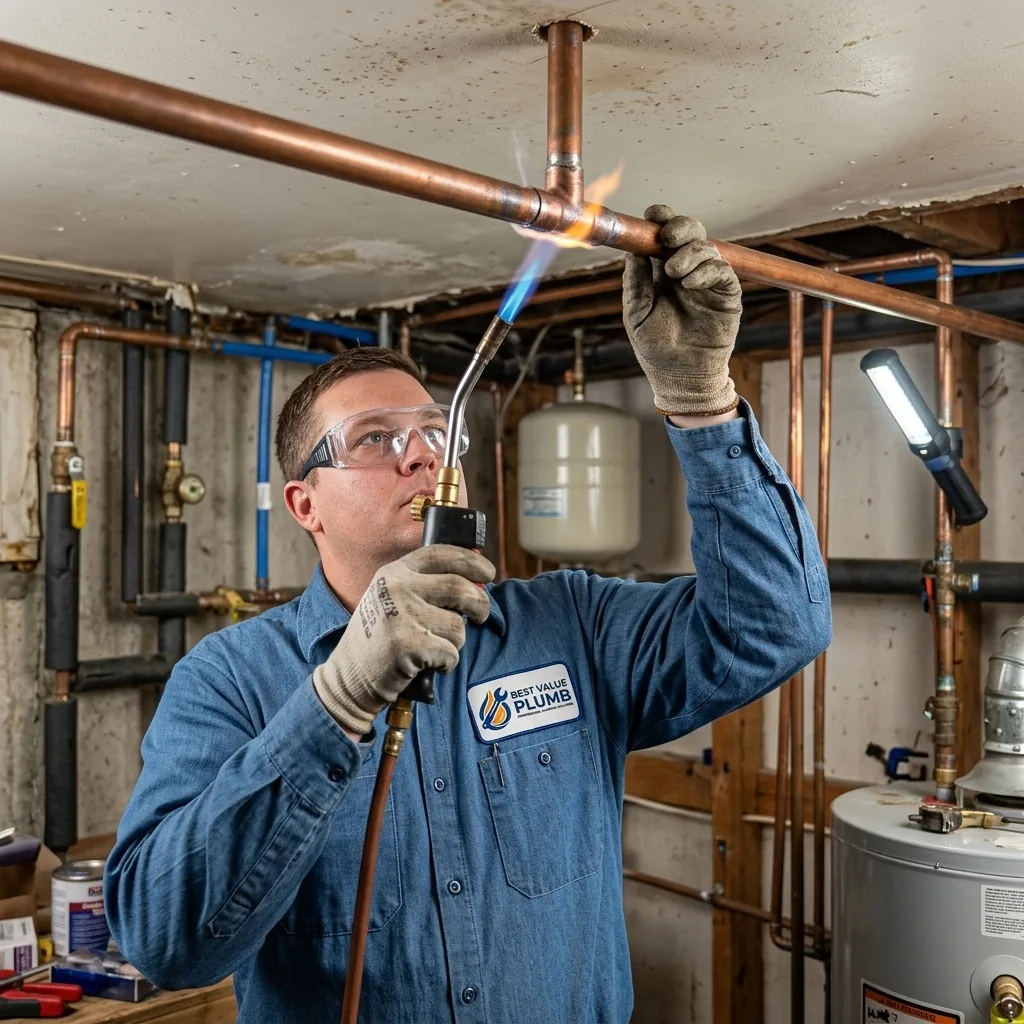
Frozen pipe prevention for Knoxville, TN homes starts well before the first hard freeze — not the night the temperature drops. Knoxville winters have two settings: mild and damp, or suddenly freezing. Most days sit in the 40s — then a cold front drops out of the mountains, overnight lows plunge into the teens, and pipes that were fine all year start to freeze. The region gets enough hard freezes each winter to make this a genuine risk, especially in homes with crawlspaces.
A frozen pipe is more than an inconvenience. Expanding ice can split a pipe wide open — and the worst damage happens at thaw, when water pours from the break, sometimes for hours before anyone notices. Prevention is cheap and straightforward. Here is what to do before the next hard freeze.
1. 🧊 Insulate Exposed Pipes in Crawlspaces and Attics
The pipes most likely to freeze are the ones you rarely see: lines in unheated crawlspaces, cold attics, and uninsulated garages, where foundation vents let freezing air circulate right around your plumbing.
Foam pipe sleeves are the easiest fix. They are inexpensive, slide over copper and PEX lines in minutes, and install with just a utility knife and tape. Cover every visible pipe in the crawlspace, especially runs near foundation vents, and use pre-slit sleeves or insulation tape on elbows and valves so no bare metal is exposed.
- Insulate hot and cold lines alike
- Cover or close foundation vents during cold snaps, and reopen them in spring
- Do not forget pipes in the garage, laundry room additions, and under raised additions
If wind blows straight through crawlspace gaps, sealing them — or adding heat cable to the most exposed runs — is worth the effort. Prefer a professional eye? Our pipe repair team can walk your crawlspace and point out the weak spots before winter.
2. 💧 Let Faucets Drip During Hard Freezes
When a hard freeze is forecast — roughly the low 20s or colder for hours — let one or two faucets drip slowly overnight. A steady drip keeps water moving just enough to relieve pressure building behind forming ice, and pressure, not the ice itself, is what bursts pipes.
Choose faucets on exterior walls or above the crawlspace — usually a kitchen or bathroom sink. A thin stream is plenty, uses very little water, and costs far less than a burst-pipe repair. Turn the faucets off once temperatures climb back above freezing.
3. 🚪 Open Cabinet Doors Under Sinks
Pipes under kitchen and bathroom sinks often sit against exterior walls, where closed cabinet doors trap the coldest air in the room. Opening the doors lets warm household air circulate around the pipes and the wall cavity behind them.
This matters most on windy nights. Move cleaning products out of reach first if you have small children or pets — then open the cabinets and let a faucet drip for real protection.
4. 🚰 Shut Off and Drain Outdoor Spigots
Outdoor spigots and their short feed pipes freeze first. Before the first hard freeze, disconnect every garden hose — a connected hose traps water in the spigot and the pipe behind it, a leading cause of burst outdoor lines.
If your spigots have interior shutoff valves, close them and open the outside spigot to drain the line. Without interior shutoffs, an insulated spigot cover adds cheap protection. Never leave hoses connected once freezing weather arrives.
5. 🔑 Know Where Your Main Water Shutoff Is
The first minutes after a burst matter enormously. Find your main water shutoff now — usually near the water meter, in the crawlspace, or where the main enters the house — and make sure everyone in the household knows how to turn it.
Test the valve yearly so it still turns freely; older valves seize from disuse. If a pipe bursts, shut off the main, open a few faucets to drain the system, and call for emergency plumbing right away. Our Knoxville team answers around the clock during cold snaps.
Frozen pipes are among the most preventable winter emergencies we see in Knoxville. An afternoon of insulation, dripping faucets on the coldest nights, and knowing your shutoff valve will carry you through nearly every freeze. And if the worst happens, Best Value Plumb connects you with local pros with 24/7 emergency service — call us for upfront pricing and an honest assessment.
Frequently Asked Questions
At what temperature do pipes start to freeze in Knoxville?
Pipes can start freezing when temperatures sit in the low 20s Fahrenheit for several hours, especially overnight. Lines in crawlspaces, attics, and along exterior walls are the first to go because they get little warmth from the house.
Should I let every faucet in the house drip during a freeze?
No. Letting one or two faucets drip is usually enough. Pick sinks on exterior walls or above unheated spaces, and keep the drip to a thin stream overnight while temperatures are at their lowest.
What should I do if I think a pipe has already frozen?
Open the faucet it serves, then gently warm the frozen section with a hair dryer or warm towels, working from the faucet back toward the blockage. Never use an open flame or torch. If the pipe has burst or you cannot find the freeze, shut off your main water valve and call a plumber.
Will my pipes be fine if I just keep the heat on?
Keeping the heat on helps, but it does not protect pipes in unheated crawlspaces, attics, or garages. Those lines still need insulation, and dripping faucets still help on the coldest nights.
Worried About Frozen Pipes This Winter?
Get your Knoxville home winter-ready before the next hard freeze. Call Best Value Plumb for an honest assessment and upfront pricing — here 24/7 when pipes freeze.
📞 Call