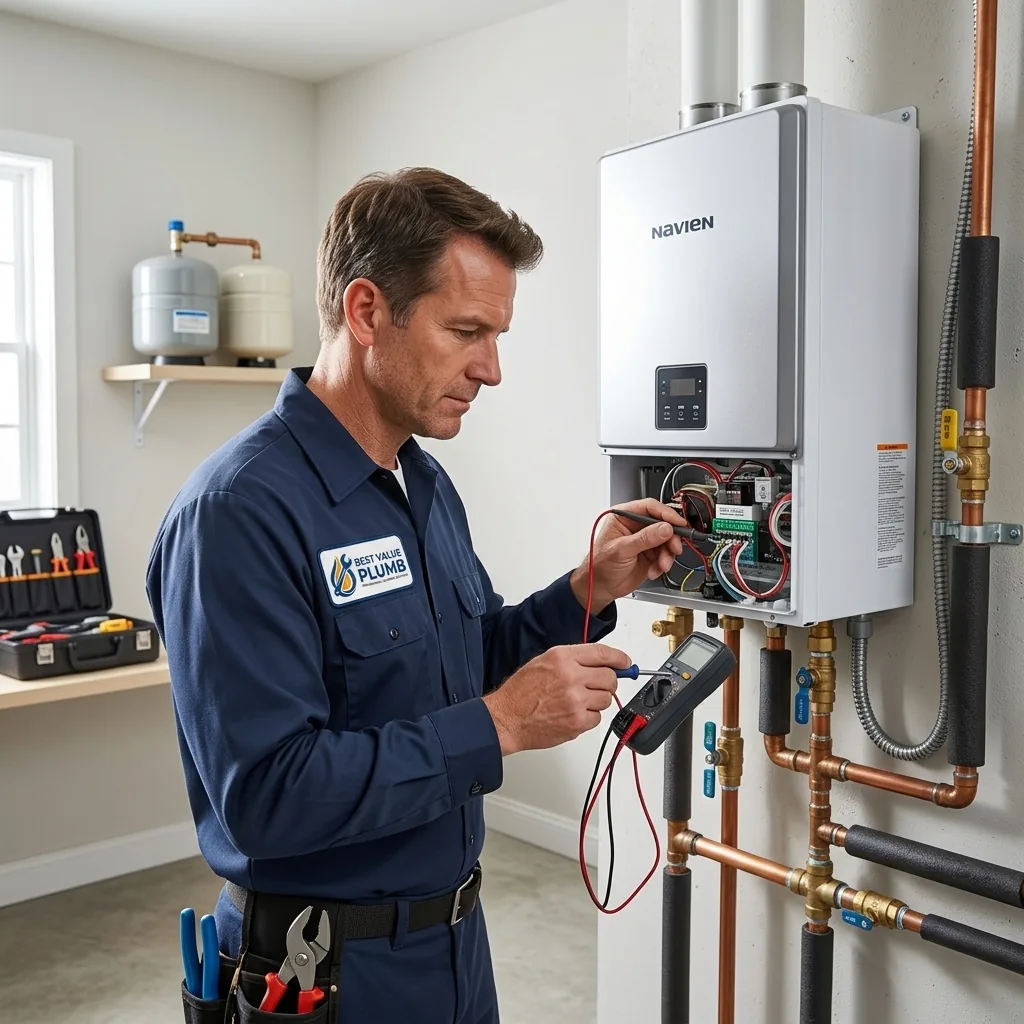
The hard water effects South Florida homeowners notice first are usually spots on dishes and scale on faucets — but the real damage happens inside your pipes. South Florida water looks clean from the tap — but it is also hard. The region’s water passes through limestone aquifers that load it with dissolved calcium and magnesium. You cannot see those minerals, but you will meet them: white crust on faucets, spots on glasses, sediment building inside your water heater.
Hard water is not a health hazard, but it is rough on plumbing: scale shortens water heater life, clogs fixtures, overworks appliances, and leaves skin and laundry feeling the difference. Here is what it does to a South Florida home — and what you can do about it.
1. 💧 What Makes South Florida Water Hard
“Hard” water means water with high mineral content, mostly calcium and magnesium. South Florida’s limestone geology loads groundwater with these minerals naturally, and treatment plants do not remove the hardness. Many homes deal with moderately hard to hard water every day.
The effects are cumulative. Each gallon that flows through your pipes leaves a microscopic layer of scale behind. Over months and years, those layers add up to real problems.
2. 🔥 Scale Is Quietly Shortening Your Water Heater’s Life
Your water heater takes the hardest hit. Heat accelerates scale formation, so minerals precipitate fastest where water gets hot — coating elements and settling as sediment at the tank’s bottom. That sediment forces the unit to work harder, raises energy use, and causes the rumbling or popping many homeowners notice.
Left alone, scale shortens the heater’s lifespan and can cause premature failure. The best defense is an annual flush to clear sediment before it hardens. Our water heater services include flushing and maintenance that keep scale from cutting your unit’s life short.
3. 🚰 Clogged Fixtures, Spotty Dishes, and Stiff Laundry
Scale does not stop at the water heater. It narrows aerators and showerheads until pressure seems to fade — often “low pressure” is just a clogged aerator needing cleaning. Dishwashers spot glassware, coffee makers crust up inside, and washing machines labor against mineral buildup in valves and hoses.
You will notice cosmetic signs too: white crust around faucet bases, soap that will not lather, laundry that feels stiff despite softener. None of it is dangerous, but it wears out fixtures and appliances faster than soft water would.
4. 🧪 Test Your Water Hardness Before You Buy Anything
Before buying treatment equipment, find out what you are dealing with. Inexpensive test strips give a rough reading in minutes; a plumber can run a precise test during a visit. Knowing your hardness level — plus issues like sediment or chlorine taste — determines which solution makes sense.
5. 🛠️ Softeners, Conditioners, and Other Options
The most established solution is a salt-based softener, which exchanges calcium and magnesium for sodium, genuinely removing hardness. Salt-free “conditioners” instead alter how minerals behave so scale does not stick. Each has tradeoffs in cost, maintenance, and results.
- Salt-based softeners: proven hardness removal; need periodic salt refills and a drain connection
- Salt-free conditioners: no salt or backwash; reduce scaling but do not truly soften water
- Point-of-use filters: fine for drinking water taste, but do nothing for the whole house
Sizing matters — a unit that is too small for your household’s water use will underperform. A plumber can test your water, size the equipment correctly, and install it with a proper bypass so maintenance never leaves you without water.
6. 🔁 Flush Your Water Heater Every Year
Whether or not you install treatment equipment, flush your water heater yearly — especially in South Florida. A yearly flush removes sediment before it bakes into crust, keeps heating efficient, and lets a professional check the anode rod and fittings at the same time.
If your heater already rumbles, makes less hot water, or pushes rusty water from the hot tap, do not wait — scale has taken hold. Our water heater team serves Oakland Park with maintenance, repairs, and honest advice on when a flush helps and when replacement is smarter.
Hard water will not hurt you, but it quietly taxes everything it touches — water heater, fixtures, appliances, patience. Test your water, flush your heater yearly, and consider treatment if signs add up. Best Value Plumb connects you with local pros — discuss pricing with them before work begins — call us and we will help you find the right fix for your home, not the most expensive one.
Related reading: Water Filtration Options for South Florida — which systems actually fix hard water.
Frequently Asked Questions
Is hard water dangerous to drink?
No. The calcium and magnesium that make water hard are not health hazards. The problems are practical: scale buildup in plumbing and appliances, spots on dishes, and dry skin and hair.
Will a water softener fix my low water pressure?
It can help if scale is the cause. Mineral buildup narrows aerators, showerheads, and pipes over time, which feels like low pressure. Cleaning or replacing scaled fixtures sometimes solves it without any new equipment.
How often should I flush my water heater in South Florida?
Once a year is the standard recommendation, and it matters more in hard-water areas. Annual flushing clears sediment before it hardens, keeps heating efficient, and extends the life of the tank.
Do I need a plumber to install a water softener?
It is strongly recommended. Proper installation needs correct sizing for your household, a drain connection, and a bypass valve. A plumber also tests your water first so you buy the right system for the actual problem.
Tired of Fighting Hard Water?
Scale, spots, and a struggling water heater? Call Best Value Plumb for water testing — we'll connect you with a local pro.
📞 Call