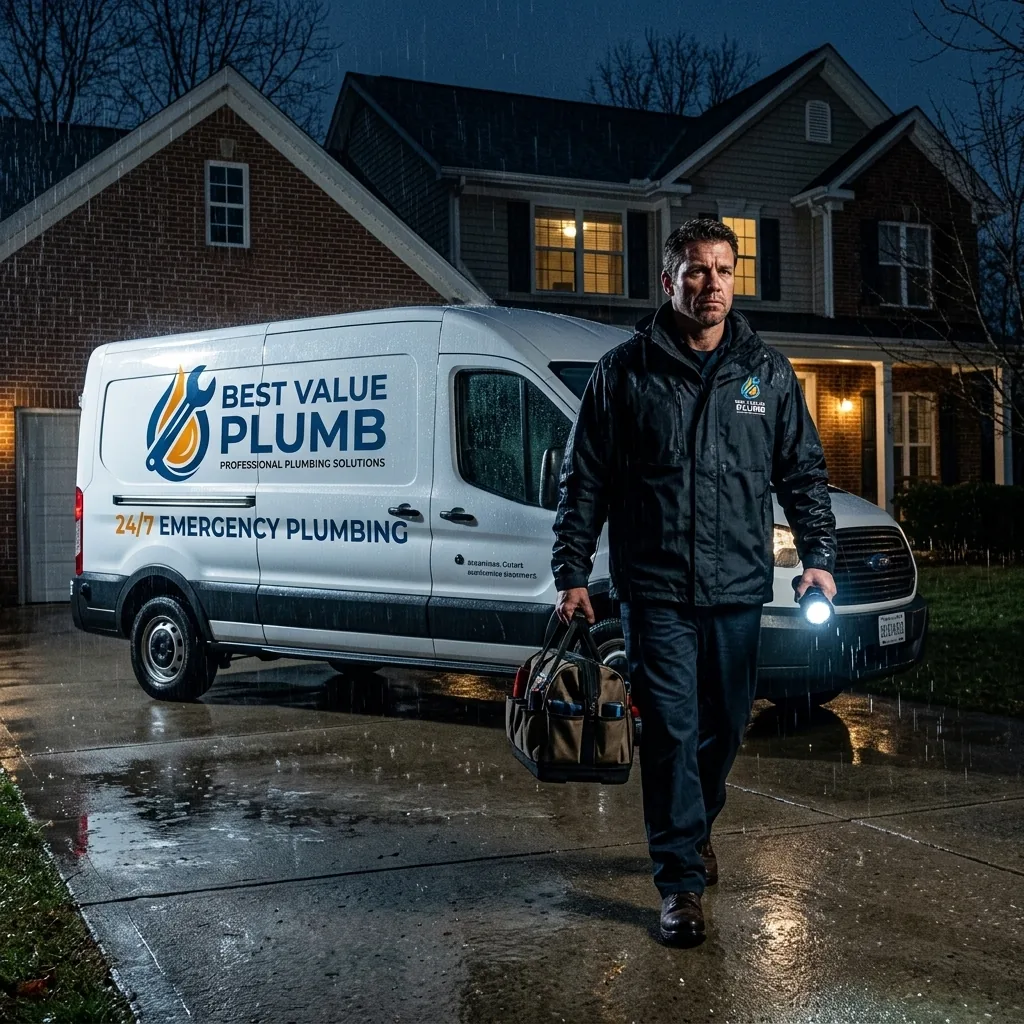
If you have a basement in East Tennessee, you probably have a sump pump — and you probably do not think about it much. That is exactly the problem. Sump pumps sit quietly for months, then one spring storm demands they move huge volumes of water away from your foundation. In the Knoxville area, where heavy downpours and flash flooding are a regular part of life, a neglected pump is a flooded basement waiting to happen.
The good news: sump pump maintenance is simple, takes less than an hour a year, and costs far less than water damage cleanup. Here is the routine that keeps your pump ready when the sky opens up.
1. 🌧️ Why Knoxville Basements Depend on Sump Pumps
Much of East Tennessee sits on clay-heavy soil that drains slowly, so strong storms send water pooling around foundations and down toward basements. A sump pump sits in a pit at that low point, and when water rises to a set level, a float switch kicks the pump on and pushes the water out through a discharge line, away from the house.
It is simple, but a stuck float, clogged inlet, or blocked discharge line turns your protection into a decoration.
2. 🧪 Test Your Pump Every Three Months
Pour a bucket of water into the pit until the float switch rises. The pump should kick on, move the water out, and shut off when the level drops. Grinding, rattling, or heavy vibration are warning signs.
Test seasonally — spring, summer, and fall. If the pump fails to start, moves little water, or never shuts off, do not wait for the next storm.
3. 🧹 Clean the Inlet Screen and Check the Discharge Line
Unplug the pump, lift it out, and rinse the inlet screen — silt and debris collect there and choke off flow. Scoop sludge from the pit bottom while you are at it.
Then walk the discharge line: it should be firmly connected, empty well away from the foundation, and be free of kinks or clogs. In cold snaps, watch for freezing: a frozen discharge line means the pump runs while the water has nowhere to go, which can burn out the motor. If your line runs above ground through an unheated area, that is worth a conversation with a plumber about rerouting or insulation.
4. 🔋 Battery Backup: Your Insurance During Power Outages
The cruel irony: the storms that deliver the most water are the ones most likely to knock out your power, leaving a plug-in pump useless. A battery backup system — either a backup pump on its own battery or a backup power supply for your main pump — keeps water moving for hours during an outage.
Test the backup the same way, and replace batteries per the manufacturer's guidance — a dead backup battery is false confidence. And if your pump ever fails in the middle of a storm, remember that Best Value Plumb offers 24/7 emergency plumbing — water in the basement cannot wait until morning.
5. 🛑 Know the Signs It Is Time for a Replacement
Sump pumps wear out, and mid-storm is the worst time to discover it. Watch for:
- It runs far longer than it used to, or cycles on and off rapidly.
- It makes loud grinding, rattling, or screeching noises.
- Visible rust or corrosion on the housing and components.
- It vibrates excessively, which often means a worn or damaged impeller.
- It has been through many heavy storm seasons and struggles to keep up.
Proper sizing matters at replacement time — an undersized pump gets overwhelmed, and the check valve and discharge routing must be right. If you are in the Knoxville area, our team at Best Value Plumb in Knoxville can size, install, and maintain the right pump and backup system for your basement, so the next storm is just weather, not an emergency.
Frequently Asked Questions
How often should I test my sump pump?
Test it at least once every three months by pouring water into the pit and confirming the pump turns on, moves water, and shuts off. Test more often during storm season.
Do I really need a battery backup in Tennessee?
Yes. The storms that bring heavy water are the same storms that cause power outages, which is exactly when a pump without backup is useless. A battery backup keeps your basement protected for hours during an outage.
Why does my sump pump run constantly?
Common causes include a stuck float switch, a failed check valve letting discharged water flow back into the pit, or groundwater inflow that overwhelms the pump. If it never shuts off, have a plumber look at it promptly.
Can I replace a sump pump myself?
A handy homeowner can do it, but proper pump sizing, check valve installation, and discharge routing all matter. A professional installation avoids the mistakes that lead to basement flooding.
Storm Season Is Never Far Away
Do not wait for a flooded basement to discover your sump pump failed. Let our team test, maintain, or replace your pump before the next East Tennessee storm. We offer 24/7 emergency service with upfront pricing.
📞 Call