Most homeowners worry about low water pressure. But pressure that is too high is the sneakier problem: everything seems to work great — strong showers, fast-filling tubs — while the excess force quietly shortens the life of every valve, hose, and appliance in your home.
Anything above 80 PSI is too high by code, and the ideal range is 40–60 PSI. Here are the seven warning signs your pressure has crept into the danger zone.
1. 🔨 Banging Pipes (Water Hammer)
The classic symptom. High baseline pressure turns every valve closure into a violent shock wave. If your pipes bang when the washing machine or dishwasher shuts off, high pressure is amplifying the problem.
Our water hammer guide covers the mechanics — but if your pressure tests high, arresters alone are a bandage. Fix the pressure first.
2. 💧 Faucets That Drip Despite New Washers
When washers and cartridges fail far sooner than they should, pressure is a prime suspect. Excess force simply overwhelms seals designed for normal ranges.
If you are replacing faucet parts every year or two, test your pressure before blaming the fixture quality.
3. 🚿 Toilets That Run or Refill Oddly
Fill valves are pressure-sensitive. Too much pressure can prevent them from shutting off cleanly, causing running, hissing, or “phantom flush” cycling.
This one is often misdiagnosed as a flapper problem. If new flappers do not fix a running toilet, check the pressure — and see our running toilet guide for the full diagnostic.
4. 💥 Burst Washing Machine Hoses or Appliance Leaks
Rubber washing machine hoses are rated for normal residential pressure. Sustained high pressure — plus water hammer spikes — is what bursts them, often at 2 AM with nobody watching.
This is the most expensive consequence on this list: a burst hose can release hundreds of gallons per hour. Braided steel hoses help, but controlling the pressure is the real fix.
5. ♨️ Water Heater Pressure Relief Valve Dripping
The T&P relief valve on your water heater is a safety device that opens around 150 PSI. If it drips or discharges regularly at normal temperatures, system pressure — often combined with thermal expansion in a closed system — is pushing it open.
A dripping T&P valve deserves prompt attention: it can indicate the valve is doing its job against genuinely dangerous pressure. Do not cap or plug it — ever.
6. 📉 Appliances Dying Young
Dishwashers, ice makers, and washing machines all have inlet valves engineered for normal pressure. Chronic high pressure shortens their lives noticeably — if your appliances keep needing valve replacements, the house pressure is worth checking.
The pattern is easy to miss because each failure looks like bad luck. Together, they tell a story.
7. 🧪 How to Test (Takes 5 Minutes)
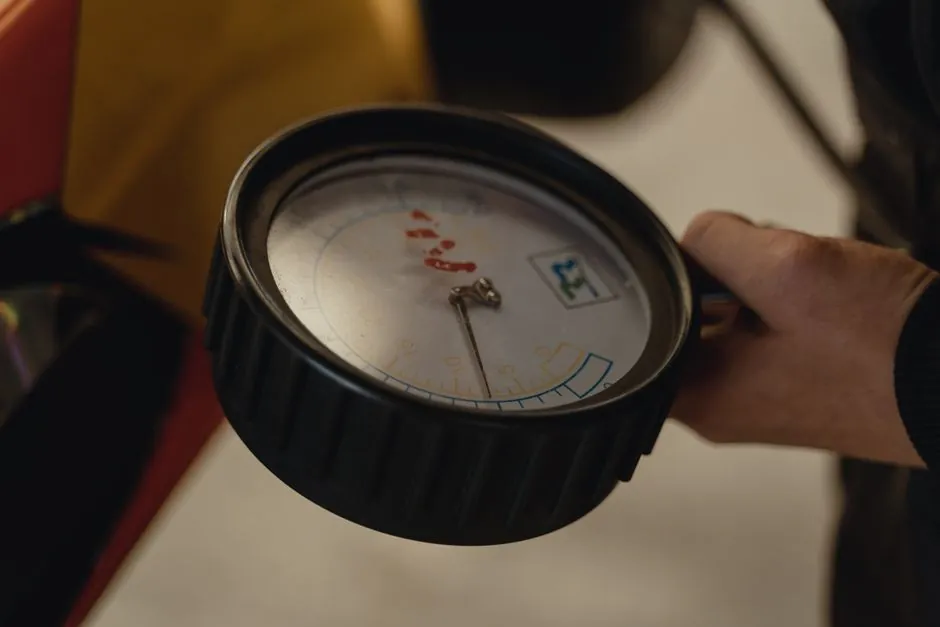
Buy a $10 water pressure gauge with a hose bib connection. Attach it to an outdoor spigot or the water heater drain valve, turn the water on full, and read the dial. Test in the morning — municipal pressure is often highest overnight.
Above 80 PSI consistently? You need a pressure-reducing valve (PRV). Between 60 and 80 is a gray zone worth watching. For the opposite problem, see low water pressure causes and fixes.
8. 🔧 The Fix: Pressure-Reducing Valve + Expansion Tank
A PRV installs on the main line where water enters the home and holds pressure at your chosen setpoint (usually 50–60 PSI). Most last 10–15 years before needing adjustment or replacement.
One caution: a PRV creates a “closed” system, and heated water expanding in a closed system needs somewhere to go — that is what an expansion tank on the water heater is for. A proper PRV installation includes checking for (and adding, if needed) thermal expansion control. This is standard plumber work, not a DIY first project involving the main line.
Frequently Asked Questions
What is considered high water pressure in a home?
Above 80 PSI. The ideal residential range is 40–60 PSI. Most plumbing codes require a pressure-reducing valve when municipal pressure exceeds 80.
Can high water pressure cause leaks?
Yes — it is one of the most common hidden causes of pinhole leaks, failed supply lines, and premature fixture failure. It stresses every joint and seal in the system continuously.
How long does a pressure reducing valve last?
Typically 10–15 years. Signs of failure include pressure creeping back up, water hammer returning, or visible corrosion on the valve body.
Do I need an expansion tank with a PRV?
Usually yes. A PRV creates a closed system, and thermal expansion from your water heater needs an expansion tank to absorb it — otherwise the T&P relief valve will weep or the pressure will spike.
Suspect Your Pressure Is Too High?
A $10 gauge gives you the answer in five minutes — and if the needle sits above 80, a PRV is one of the highest-ROI plumbing upgrades you can make. Call Best Value Plumb and we'll connect you with a local plumber in Mary Esther, Oakland Park, or Knoxville who can test, install, and set it correctly.
📞 Call