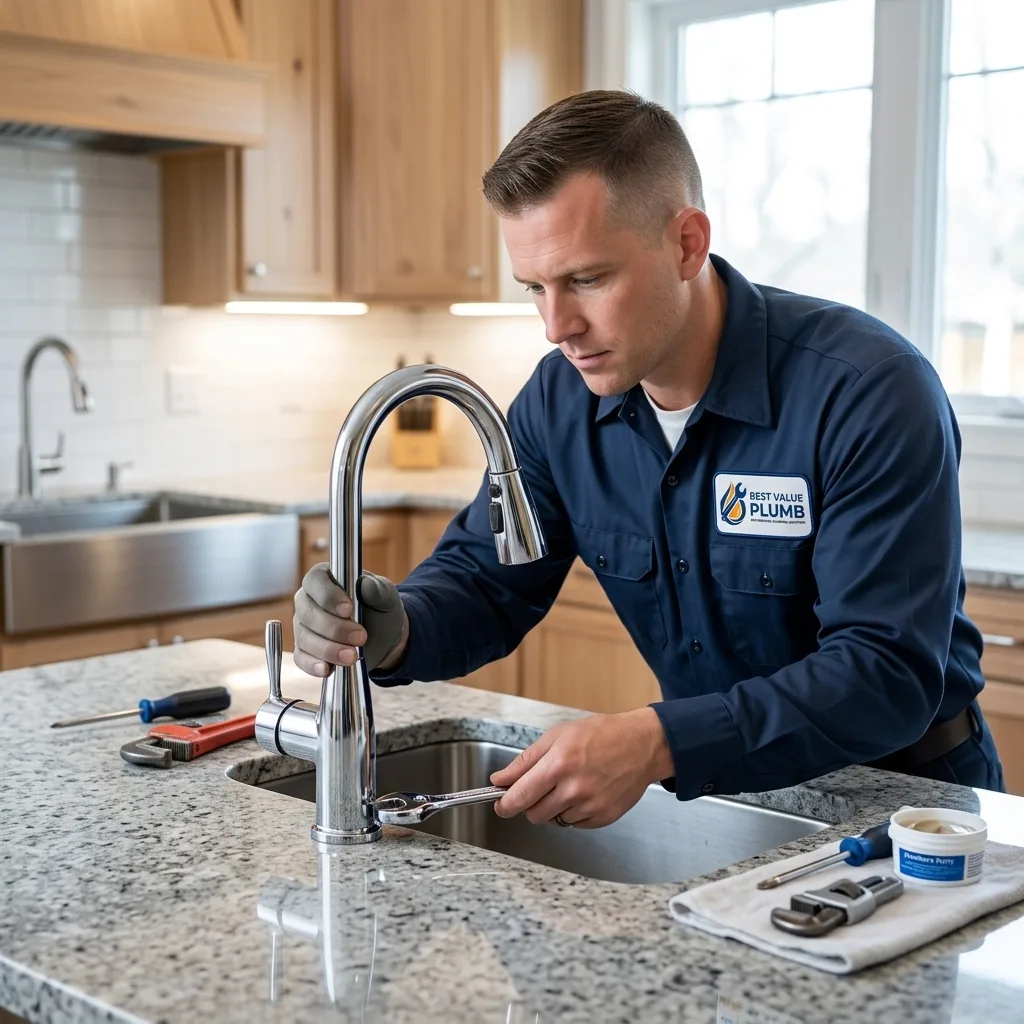
The kitchen plumbing upgrades with the best return are not always the flashiest — a new faucet and supply lines beat a luxury sink every time. The kitchen is the hardest-working room in your house. The faucet gets used dozens of times a day, the sink handles everything from rinsing vegetables to soaking sheet pans, and the dishwasher and disposal work behind the scenes. When you are thinking about home upgrades, kitchen plumbing is one of the smartest places to put your money — the fixtures you touch every day shape how the whole room feels and functions.
The good news is that many kitchen plumbing upgrades are straightforward. Some are doable in a weekend with basic tools; others involve opening walls or moving drain lines and belong to a licensed plumber. Here is an honest breakdown of both.
1. 🚰 Start With the Faucet: Pull-Down Models
Modern pull-down faucets with high-arc spouts make filling pots and rinsing produce easy, and single-handle designs work well with messy hands.
Look for solid brass bodies and ceramic disc cartridges, which outlast plastic internals. A like-for-like faucet swap is one of the most DIY-friendly upgrades: shut off the angle stops, disconnect the supply lines, and swap the fixture with a basin wrench.
2. 🛁 Go Deeper: Deep-Basin and Workstation Sinks
Shallow double-basin sinks were standard for decades, but deep single-basin sinks have taken over for good reason: they swallow large pots, baking sheets, and stacks of dishes without the awkward balancing act. Workstation sinks add built-in ledges for cutting boards and colanders.
Swapping a sink is usually manageable — until the new sink is a different size or depth than the old one. A deeper basin often means reconfiguring the tailpiece, disposal, and trap to line up again. If you are changing the countertop cutout or moving drain lines, that is the point where calling in professional bathroom and kitchen plumbing help saves you from a weekend of frustration.
3. 🍲 Add a Pot Filler Over the Stove
A pot filler is a small swing-arm faucet mounted on the wall behind your range, so you can fill pots right where they cook. If you cook large meals often, it saves lugging heavy pots of water across the kitchen.
This one is firmly in the pro-install category. A pot filler needs a new water line run inside the wall: cutting drywall, tying into supply piping, and adding its own shutoff valve. The fixture itself is the easy part; the plumbing behind the wall is where a licensed plumber earns their keep.
4. 🔄 Hidden Kitchen Plumbing Upgrades: Supply Lines and Shutoff Valves
The hidden upgrades are the ones that prevent floods:
- Dishwasher supply line: replace old rubber or plastic lines with a steel-braided supply line, which resists bursting far better.
- Shutoff valves: swap old multi-turn gate valves under the sink for quarter-turn ball valves, which close reliably with a quick twist.
- Supply lines: flexible steel-braided lines to the faucet are more forgiving and easier to service than rigid copper.
5. 🗑️ Garbage Disposals and Filtration at the Sink
If your disposal is loud, jam-prone, or old enough to vote, upgrading to a modern unit with better sound insulation and overload protection is a noticeable daily improvement. Same-size disposal swaps are reasonable DIY if you are comfortable with the electrical disconnect.
An under-sink water filter is another high-value add: a simple carbon filter at the cold-water line gives you better-tasting drinking and cooking water without a countertop pitcher taking up space. Before upgrading, make sure the drain line is clear — a drain cleaning visit keeps a new disposal from fighting old buildup.
The quick DIY vs. pro rundown: faucet swaps, same-size disposal replacements, under-sink filters, and supply line upgrades are usually DIY-friendly; pot fillers, sink cutout changes, moving drains, or opening walls belong to a licensed plumber.
Frequently Asked Questions
How long does a kitchen faucet upgrade take?
A straightforward like-for-like faucet swap usually takes a handy homeowner one to two hours, including shutting off the water and cleaning up. If the sink configuration or supply lines need changes, plan for more time or call a plumber.
Do I need a plumber to replace my kitchen sink?
Not always. If the new sink matches the old one's size and the drain connections line up, many homeowners handle it. You will want a plumber if the countertop cutout changes, the drain needs rerouting, or the deeper basin no longer lines up with the trap.
Are pot fillers worth it?
If you cook large meals often, a pot filler is a convenience you will use daily. Just budget for professional installation, since it requires running a new water line inside the wall behind the stove.
What should I replace when installing a new dishwasher?
Always replace the supply line with a steel-braided one and check the shutoff valve while you are there. It is also a good time to confirm the drain hose has a proper high loop or air gap to prevent backflow.
Thinking About Kitchen Upgrades?
Whether it is a new faucet, a pot filler, or a full sink replacement, the independent local pros we connect you with handle the plumbing side of your kitchen project. Call Best Value Plumb and we'll connect you with a local plumber — discuss pricing with them directly.
📞 Call