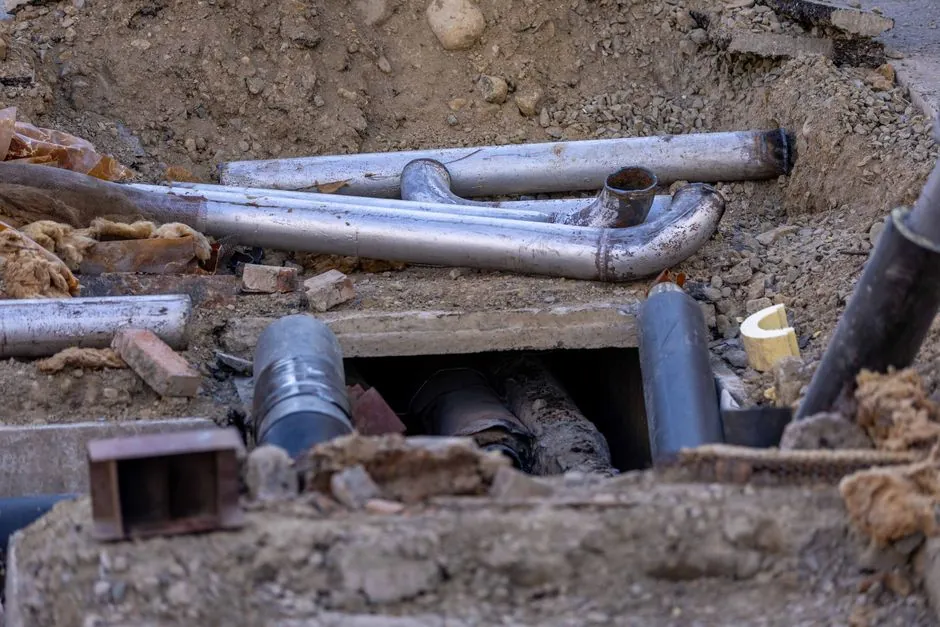
The pipe carrying water from the street to your house is one of the most expensive things to repair — and one of the easiest to ignore, because it is buried. A main water line leak can waste thousands of gallons a month while showing only subtle symptoms above ground.
One converted reader of this article represents a multi-thousand-dollar job, so plumbers take these signs seriously. Here are the seven to watch for.
1. 💸 Your Water Bill Jumps for No Reason
The most common first sign. Compare bills month to month: a sudden, sustained increase with no change in usage — no guests, no new irrigation, no filled pool — means water is going somewhere you cannot see.
Many utilities will adjust one abnormal bill if you repair a verified leak, so keep the bills as documentation.
2. 🌱 Soggy Spots or Unusually Green Patches
A leak underground keeps soil saturated. Look for persistently soggy areas, sunken spots, or grass that is dramatically greener and faster-growing than the surrounding lawn — it is being fertilized and irrigated from below.
In sandy Florida soil, water drains fast, so surface sogginess means a significant leak. Do not wait on this one.
3. 📉 Water Pressure Drops House-Wide
A breach in the main line bleeds off pressure before water reaches your fixtures. If pressure has declined gradually across the whole house — not just one fixture — the main line is suspect.
Rule out the simple stuff first (see low water pressure causes and fixes), but a main-line leak is high on the differential for whole-house pressure loss.
4. 🔊 Hissing or Running Water Sounds
With the house quiet and no water running, listen at the main shutoff valve and along the line's path. A faint hissing or the sound of running water with everything off is a classic leak signature.
The meter test confirms it: turn off all water, note the meter reading, wait an hour with no usage, and read it again. Any movement means water is escaping somewhere.
5. 🛣️ Cracks in Driveway or Foundation Shifts
Underground leaks erode soil, creating voids. Over a driveway or walkway, that shows up as cracking, settling, or hollow sounds. Near the foundation, it can contribute to settling — a far more expensive problem than the pipe itself.
Soil erosion from a leak is progressive: the void only grows. Early repair is dramatically cheaper than foundation work later.
6. 💧 Puddles That Never Dry
Standing water in the yard that persists days after rain — especially along the straight-line path from the street meter to your house — is nearly diagnostic.
Your water utility can usually mark the line's approximate path, or a plumber can trace it precisely. Do not dig blindly: call 811 before any excavation.
7. 🧪 Discolored Water or Air in the Lines
Air sputtering from faucets or intermittent discoloration can accompany a main-line breach, as soil and air enter through the break when pressure fluctuates.
Combined with any sign above, this moves the diagnosis from “possible” to “probable.”
8. 🔧 What Happens Next: Detection and Repair
A plumber confirms a main-line leak with acoustic listening equipment or by isolating sections of the line. Modern repairs often use trenchless methods — pipe bursting or lining — that replace the line with minimal digging.
Costs vary widely by length, depth, and method, but catching it at the “high bill and soggy spot” stage is always cheaper than at the “collapsed driveway” stage. If you also notice other hidden leak signs, mention them on the service call — they help pinpoint the break.
Frequently Asked Questions
Who is responsible for a main water line leak?
Usually the homeowner owns the line from the meter (or property line) to the house — check your utility's policy. The utility owns the street side. Know where your responsibility starts before you need to.
How do plumbers find an underground water leak?
With acoustic listening devices that hear the leak's vibration, pressure testing isolated sections, and sometimes thermal imaging. The meter test at home is the free first step.
Can a main water line be repaired without digging up the yard?
Often, yes. Trenchless methods like pipe bursting pull a new line through the old one's path with only small access pits. Suitability depends on the pipe's condition and layout.
How much water can a main line leak waste?
A 1/8-inch crack can waste thousands of gallons per month — enough to multiply a water bill several times over while remaining nearly invisible above ground.
Seeing One (or More) of These Signs?
Main line leaks don't heal — they erode. The difference between an early repair and a late one is measured in thousands. Call Best Value Plumb and we'll connect you with a local plumber in Mary Esther, Oakland Park, or Knoxville who can locate the leak and lay out trenchless and traditional options.
📞 Call