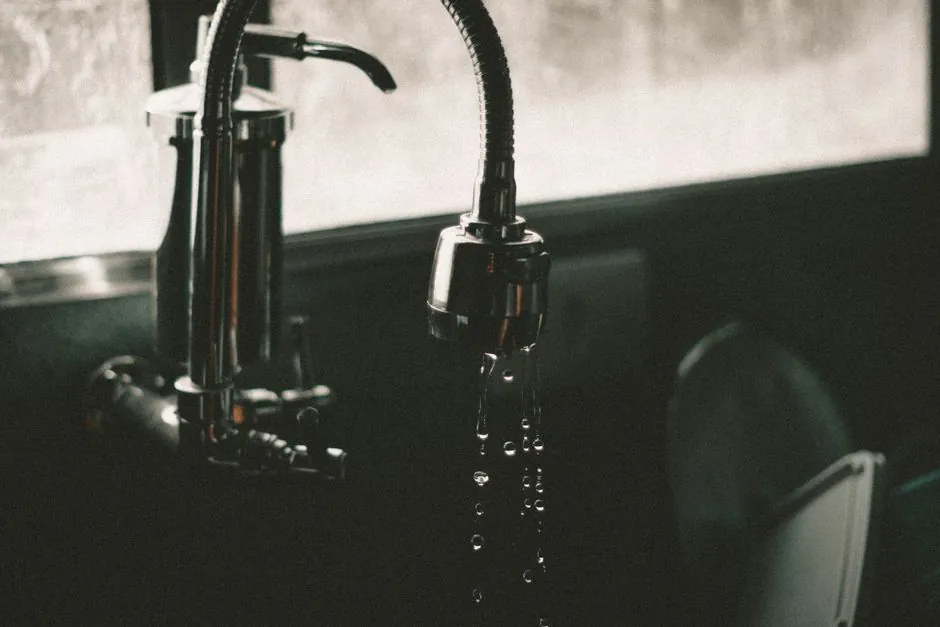
Water pooling around the base of your kitchen faucet — or dripping inside the cabinet below — is the kind of leak that quietly destroys countertops and cabinet floors. The causes split neatly into two categories: the easy O-ring fix, and the supply-line leak you need to catch fast.
Here is how to tell which one you have.
1. 🔍 First: Base Leak or Under-Sink Leak?
Dry everything, run the faucet, and watch.
- Water appears around the faucet base on the countertop: O-ring, gasket, or loose mounting — the easy category.
- Water drips inside the cabinet: supply line, sprayer hose, or drain connection — needs faster action because cabinet damage compounds daily.
They can also occur together: a base leak that runs down and looks like an under-sink leak. Always check the top first.
2. 🔩 Cause #1: Worn O-Rings and Base Gasket
The O-rings sealing the faucet body to the countertop dry out and crack over years of hot water and cleaning chemicals. Water then seeps under the base with every use.
Fix: shut off the supply valves, disconnect the supply lines, unscrew the mounting nuts, and lift the faucet. Replace the O-rings and base gasket (take the old ones to match), clean the countertop surface, and reseat with a thin bead of plumber's putty or silicone per the manufacturer's instructions. An hour's work, a few dollars in parts.
3. 🔧 Cause #2: Loose Mounting
If the whole faucet wobbles, the mounting nuts underneath have loosened — and a rocking faucet breaks its own seal with every use. Snug the mounting nuts (basin wrenches exist for exactly this awkward space) and check whether the leak stops before replacing any parts.
This is the most overlooked cause. Always check stability before buying parts.
4. 🚿 Cause #3: Sprayer Hose Leaks
Pull-out sprayer hoses develop pinholes and split at the crimp connections. The symptom: water inside the cabinet only when the sprayer is used, sometimes spraying in an arc you can see with a flashlight.
Replacement hoses are brand-specific but widely available. While you are in there, check the weight and guide that retract the hose — a sticking sprayer stresses the hose and shortens its life.
5. ⚠️ Cause #4: Supply Line Failure (Act Fast)
Corroded, kinked, or weeping supply lines are the dangerous category. A supply line does not drip politely forever — it can burst, especially braided lines past their prime or rigid copper lines stressed by a wobbling faucet.
If a supply line is actively leaking, shut its valve immediately. Replace suspect lines with new braided stainless lines — and if the shutoff valves themselves are frozen or corroded, that is a plumber call. Cabinet water damage plus hidden leak signs like musty smells mean the leak is older than it looks.
6. 📞 When to Call a Plumber
Call if: the shutoff valves will not turn, the faucet is corroded to the countertop, water is coming from inside the wall, the cabinet floor is soft or moldy, or you are replacing the faucet entirely and want the supply lines and valves refreshed at the same time.
A faucet replacement is also a natural moment to upgrade — see kitchen plumbing upgrades that add value if you are considering it. For suspected supply issues elsewhere, professional leak detection finds what eyes cannot.
Frequently Asked Questions
Why is water pooling around the base of my kitchen faucet?
Usually worn O-rings or a failed base gasket letting water seep under the faucet body. A loose, wobbling faucet causes the same symptom by breaking its seal.
Can I still use a faucet that's leaking underneath?
Briefly, but every use adds water to the cabinet. Shut the supply valves when not in use until it's fixed — cabinet floors rot fast.
How much does it cost to fix a leaking kitchen faucet?
DIY O-ring replacement costs a few dollars. A plumber typically charges $150–$300 for faucet resealing or supply line replacement; full faucet replacement runs higher with the fixture.
Should I use plumber's putty or silicone under a faucet?
Follow the manufacturer's instructions — putty stains some stone countertops, where silicone is required. When in doubt, silicone is the safer universal choice.
Water Where It Shouldn't Be?
Base leaks are usually quick fixes; supply-line leaks are races against cabinet damage. Either way, don't let it sit. Call Best Value Plumb and we'll connect you with a local plumber in Mary Esther, Oakland Park, or Knoxville.
📞 Call