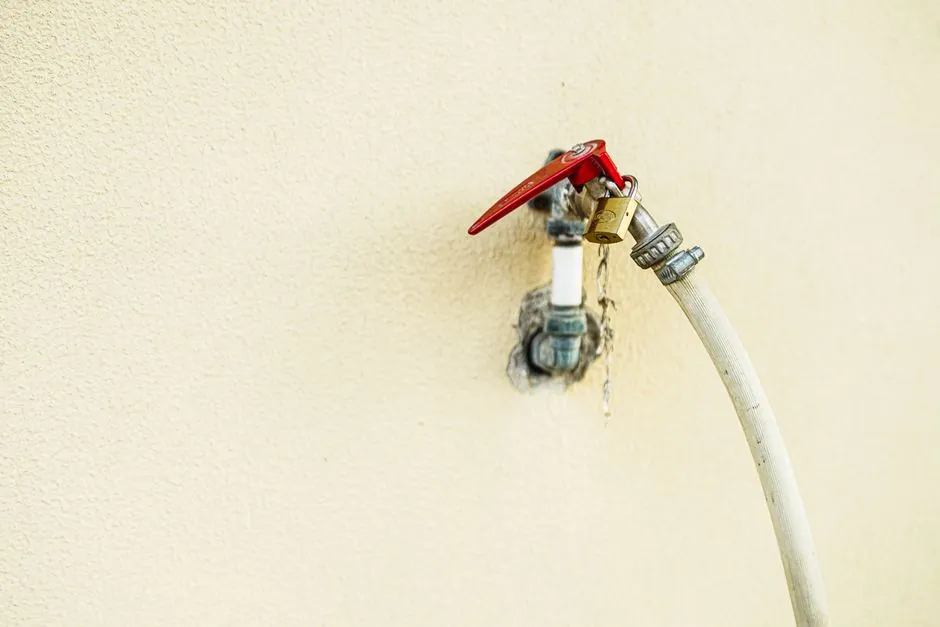
That steady drip from the outdoor faucet is easy to ignore — it is outside, after all. But a leaking hose bib wastes water around the clock, and in freezing weather a compromised bib can burst inside your wall, where the real damage happens.
Most hose bib leaks come from two $2 parts. Here is how to fix them — and how to recognize the one failure mode that needs a plumber.
1. 🔍 Diagnose: Where Exactly Is It Leaking?
- From the spout when off: worn seat washer — the classic drip.
- Around the handle stem: loose or worn packing nut.
- From behind the wall or inside: cracked pipe or split bib body — stop and call a plumber.
- Only when a hose is attached: missing or worn hose washer in the coupling — a 10-cent fix.
2. 🔧 Fix 1: Tighten the Packing Nut
If water seeps around the handle stem, the packing nut — the nut directly behind the handle — has loosened. Hold the faucet body steady with one wrench and snug the packing nut about a quarter turn with another.
This alone fixes a large share of stem leaks. Do not overtighten: the handle should still turn smoothly. If snugging does not stop it, the packing material inside is worn and needs replacing — still a cheap, easy part.
3. 🔩 Fix 2: Replace the Seat Washer
A drip from the spout with the handle fully closed means the seat washer is shot. Shut off the water to the bib (there is often a dedicated indoor shutoff — use it rather than the whole house if you can), remove the handle and packing nut, and unscrew the stem.
The washer sits at the stem's tip, held by a small brass screw. Match it at the hardware store — take the old one — reassemble with a dab of plumber's grease, and test. Ten minutes, a couple of dollars, drip gone.
4. ❄️ The Knoxville Freeze Problem: Cracked Bibs
In Knoxville, where hard freezes happen, the dangerous failure is a split bib or burst pipe inside the wall. Signs: water leaking from inside the wall when the bib is on, or a bib that worked fine in fall and leaks badly after the first freeze.
This is not a washer problem — the pipe itself has split. Shut off the bib's indoor valve immediately and call a plumber. Our frozen pipe prevention guide covers how to protect bibs before winter, including frost-free sillcocks.
5. 🛡️ Prevention: Hoses Off Before Winter
The single most important hose bib habit: disconnect all hoses before freezing weather. A connected hose traps water in the bib, preventing it from draining — and trapped water is what bursts pipes.
Add insulated faucet covers for extra protection, and know where the indoor shutoff is before you need it in a hurry. Florida homeowners: your risk is lower, but the same washer fixes apply — and hurricane season is a good reminder to check outdoor plumbing (see our hurricane checklist).
Frequently Asked Questions
Why does my outdoor faucet leak when I turn it on?
If it only leaks while running, the packing around the stem is the likely culprit — try snugging the packing nut. If it leaks from inside the wall, the pipe may be cracked.
Can I replace a hose bib myself?
Washer and packing repairs, absolutely. Replacing the entire bib involves soldering or threading pipe at the wall — doable for experienced DIYers, but a pro job for most.
Should I leave my outdoor faucet dripping in winter?
That advice is for indoor faucets on vulnerable lines. For hose bibs, the correct move is disconnecting hoses, shutting off the indoor valve, and draining the bib — not dripping it.
What is a frost-free hose bib?
A sillcock with a long stem that shuts water off 8–12 inches inside the warm wall, so no water sits in the freezing zone. It is the best upgrade for cold-climate homes.
Bib Still Leaking — or Leaking Inside the Wall?
Washer fixes are easy; cracked pipes inside the wall are not. If water is coming from anywhere but the spout or handle, shut off the bib's supply and get help. Call Best Value Plumb and we'll connect you with a local plumber in Mary Esther, Oakland Park, or Knoxville.
📞 Call