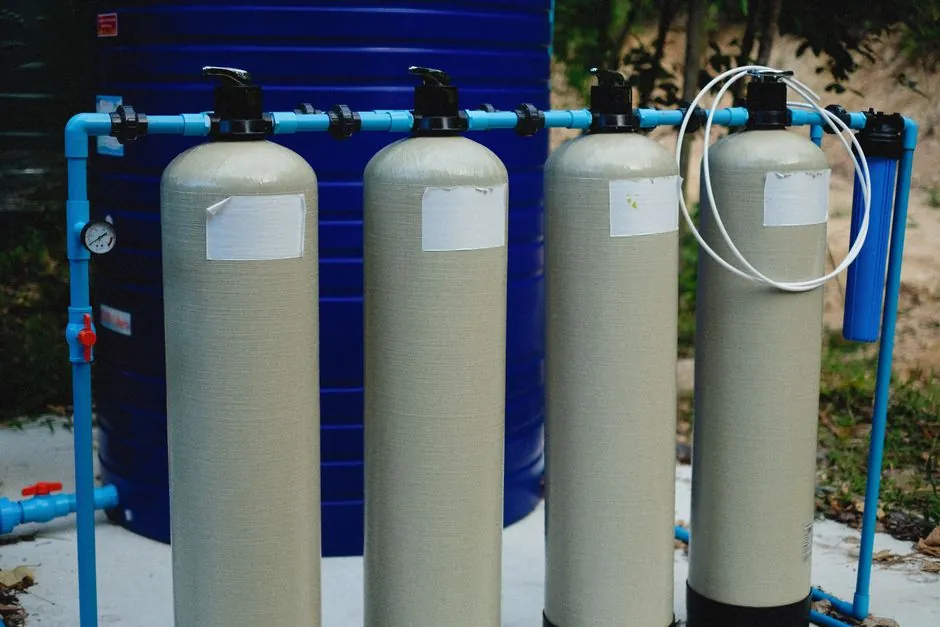
Water softeners work so quietly that most homeowners only notice them when they stop working — which usually announces itself as the slow return of every hard-water annoyance you had forgotten about. Spots on the glassware, stiff towels, soap that will not lather.
Before assuming the unit is dead, know this: roughly half of “failed” softeners just have a salt bridge — a fixable 10-minute problem. Here are the nine signs, ranked from easy fixes to real failures.
1. 🍽️ Hard Water Symptoms Return
Spots on dishes, film on shower doors, soap that will not lather, stiff laundry — the classic hard-water package. If your softener used to prevent these and they are back, the unit is not softening.
Confirm with a $10 hardness test strip on cold tap water. If hardness is back to pre-softener levels, work through the checks below. Our hard water effects guide covers what untreated hard water does to a home.
2. 🧂 The Salt Bridge (Check This First)
A salt bridge is a hard crust of salt forming above the water line in the brine tank, creating an air gap so the system cannot make brine — and without brine, no regeneration. It causes a huge share of “my softener stopped working” calls.
Push a broom handle into the salt: if it hits a hard crust inches down with loose salt above, that is a bridge. Break it up carefully (do not stab the tank walls), remove the chunks, and let the system regenerate. Use clean pellet salt going forward — rock salt bridges more.
3. 💧 Water Level Problems in the Brine Tank
The brine tank should hold a few inches of water. Bone dry means the unit is not drawing brine (check the injector and brine line for clogs). Overfull — water nearly to the top — means it is not draining brine properly (check the drain line for kinks).
Both are fixable, and both stop regeneration cold until resolved.
4. 🧂 Salty-Tasting Water
A little saltiness right after regeneration is normal. Persistent salty taste means the rinse cycle is not completing — stuck valve, clogged injector, or a settings issue.
Do not ignore this one: it means the system is malfunctioning, not just underperforming.
5. 📉 Low Water Pressure After the Softener
Resin beads break down over 10–15 years into fine “fines” that clog the system and can even migrate into your plumbing. The symptom: pressure drops noticeably, sometimes with tiny amber beads appearing in faucet aerators.
Beads in the aerator are the smoking gun for resin failure. Resin can be replaced, but on units past 12–15 years, full replacement is usually the better economics.
6. 🔁 Constant or Never-Ending Regeneration
A softener that regenerates every night — or never stops running water to the drain — has a stuck valve or a failed timer/control head. Besides wasting hundreds of gallons, it means no actual softening is happening.
Check the settings first (a power outage can reset timers). If settings are right and it still will not cycle properly, the control head needs service.
7. ⏳ Age: The 10–15 Year Clock
Most softeners last 10–15 years. Past that, resin exhaustion, valve wear, and tank fatigue stack up. If your unit is 15+ and showing any symptom on this list, put replacement — not repair — at the top of the options.
Newer units are also significantly more salt- and water-efficient, so replacement often pays back in operating costs.
8. 🔧 What You Can Fix vs. What's a Pro Job
DIY: salt bridges, salt level maintenance, cleaning the brine tank annually, checking the bypass valve position (make sure it is not in bypass!), verifying settings after power outages.Pro: resin replacement, control valve rebuilds, injector/drain line internal clogs, and full unit replacement — which involves plumbing the new unit into the main line correctly, including the bypass loop.
9. 💡 Sizing Matters on Replacement
An undersized softener regenerates constantly and dies young; an oversized one wastes salt. Proper sizing is based on tested water hardness and household usage — not on what was on sale.
If you are replacing, get the water tested first and size to the numbers. A pro can also tell you whether a softener is even the right tool — some water issues need filtration instead of (or as well as) softening.
Frequently Asked Questions
How do I know if my water softener is working?
Test tap water hardness with a strip — it should read near zero grains per gallon. Also check: salt level dropping steadily, periodic regeneration cycles, and no hard-water symptoms.
What is a salt bridge in a water softener?
A hard salt crust above the water line in the brine tank that blocks brine formation. It stops regeneration and mimics a dead softener, but breaks up in minutes.
How long do water softeners last?
10–15 years on average. Resin degrades, valves wear, and efficiency drops. Heavy iron in the water shortens resin life unless there's iron-specific treatment.
Can I repair a water softener myself?
Salt bridges, salt refills, and settings checks are easy DIY. Resin replacement, valve rebuilds, and new installations are pro jobs involving the main water line.
Softener Acting Up?
Start with the salt bridge check — it solves half of all ‘failures.’ If the resin's shot or the unit's past its prime, a pro can size and install the right replacement. Call Best Value Plumb and we'll connect you with a local plumber in Mary Esther, Oakland Park, or Knoxville.
📞 Call