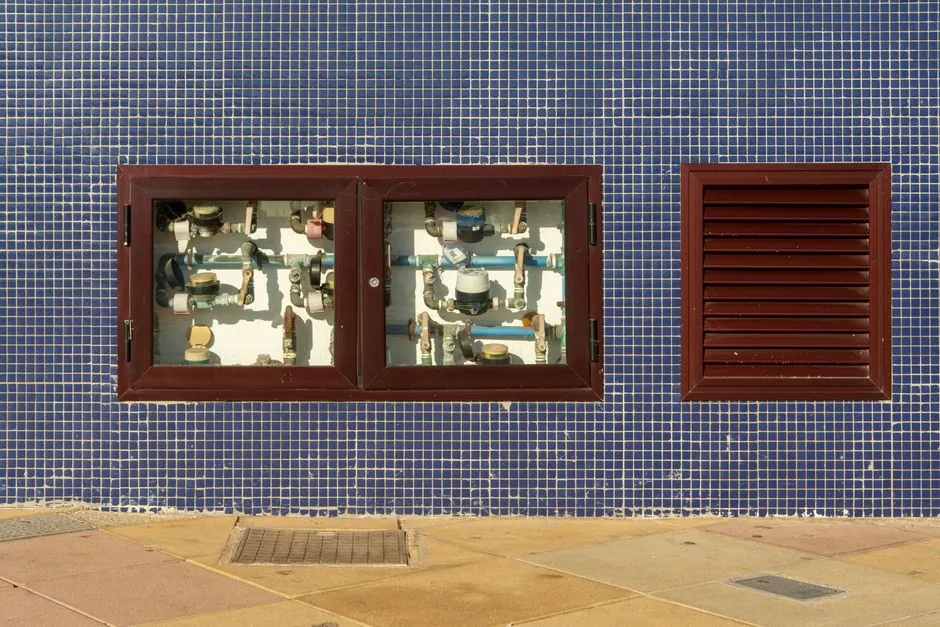
Every homeowner should be able to answer one question in under ten seconds: where is my main water shutoff valve? In a burst-pipe emergency, the difference between a mop-up and a five-figure insurance claim is often just how fast someone reaches that valve.
Yet most people only go looking for it while water is already spraying. Here is how to find yours now — calmly — and make sure it actually works.
1. 🏠 The Usual Locations (In Order of Likelihood)
The main shutoff sits where the water line enters your house. Check in this order:
- Basement: on the wall facing the street, near the water meter or where the pipe comes through the foundation.
- Crawlspace: same logic — street-facing side, often near the access hatch.
- Garage or utility room: common in slab-on-grade homes in Florida, where the line enters through the garage wall.
- Outside at the meter box: in warm climates the shutoff is often in a ground-level box near the curb or property line.
Look for a wheel handle (gate valve) or a lever handle (ball valve). Newer homes almost always have the lever type.
2. 🔧 Gate Valve vs Ball Valve: Know Which You Have
A ball valve has a lever handle: quarter-turn (lever parallel to the pipe = open, perpendicular = closed). These are reliable and rarely seize. A gate valve has a round wheel: turn clockwise several rotations to close. Gate valves are common in older homes and are notorious for seizing after years of disuse.
If you have a gate valve, test it gently now. If it will not budge, do not force it with a wrench — a snapped gate valve stem turns a test into an emergency. That is a call-a-plumber situation, and upgrading to a ball valve is inexpensive while everything is dry.
3. 🚰 The Two Valves You Actually Have
Most homes have two shutoffs and people confuse them:
- The house-side valve (yours): inside the home or at the meter box, shuts off water to the house. This is the one to use in emergencies.
- The street-side / curb valve (the utility's): usually requires a special key and in many areas homeowners are not supposed to operate it.
For a burst pipe or major leak inside, the house-side valve is always the right first move. Our emergency checklist walks through the full sequence: shut off, then call.
4. 🧪 Test It Before You Need It
Twice a year, close the valve and open a faucet to confirm the water actually stops. A valve that spins without stopping the flow has failed internally — better to discover that on a calm Saturday than at 2 a.m. with a burst washing-machine hose.
After testing, reopen the valve fully, then back it off a quarter-turn (gate valves only — this prevents seizing). Ball valves should be left fully open. If the valve leaks at the stem when operated, the packing nut needs tightening or the valve needs replacing.
5. 📍 Label It and Tell the Household
Once found, tag the valve with a bright label or ribbon so anyone — a teenager, a housesitter, a guest — can find it in seconds. Walk every adult in the home to it once. In an emergency, the person home is rarely the person who knows.
Going away? Shutting off the main before vacation is the single best flood-prevention step for an empty house. And if your pipes are older, watch for signs the main line itself is leaking — a failing service line is a different problem than a failing valve.
6. ⚠️ When the Valve Fails You
Call a plumber if: the valve is seized or snapped, it spins without stopping the water, it leaks from the stem or body, or you cannot find any house-side shutoff at all (some older homes genuinely lack one — installing one is a straightforward job).
A missing or failed main shutoff is also worth fixing proactively: plumber cost data shows valve replacement is one of the cheaper service calls, and it buys you control over every future plumbing emergency.
Frequently Asked Questions
Where is the main water shutoff valve usually located?
Where the water line enters the house: basement wall facing the street, crawlspace near the access hatch, garage/utility room in slab homes, or an outdoor meter box near the curb in warm climates.
Which way do I turn the main water valve to shut it off?
Ball valve (lever handle): turn the lever a quarter-turn so it's perpendicular to the pipe. Gate valve (wheel handle): turn clockwise until it stops.
Should I turn off my main water valve when on vacation?
Yes — it's the single most effective flood-prevention step for an empty house. Also consider shutting off the water heater or setting it to vacation mode.
What if my main shutoff valve won't turn?
Don't force it with tools — a snapped stem creates an emergency. Call a plumber to replace it; upgrading an old gate valve to a ball valve is an inexpensive, high-value job.
Found It? Make Sure It Works.
A shutoff valve you can't find — or one that won't turn — is no valve at all. Take five minutes today to locate and test yours. And if it's seized, missing, or leaking, call Best Value Plumb and we'll connect you with a local plumber in Mary Esther, Oakland Park, or Knoxville.
📞 Call