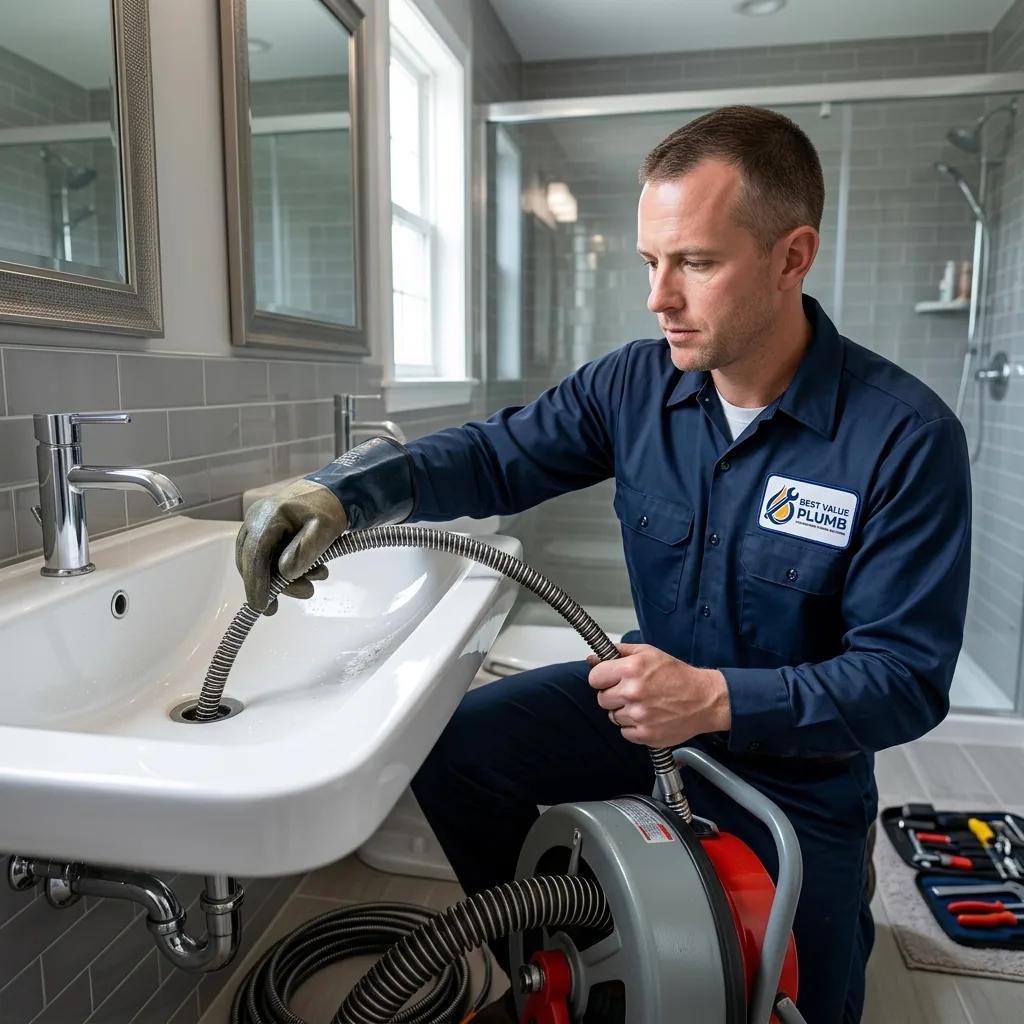
When you need drain cleaning in Niceville, FL, it often starts on a Saturday morning: the washing machine is mid-cycle, and water starts rising in the shower stall instead of draining away. Or maybe it is subtler: the kitchen sink takes a full minute to empty, the guest bathroom has developed a sour smell, and the toilet gurgles every time the dishwasher runs. In a town of family neighborhoods tucked between Boggy Bayou and Eglin Air Force Base, these are not random annoyances — they are the classic early warnings of a drain system that needs professional cleaning.
Niceville's plumbing has a specific personality. Mature live oaks and water oaks send roots hunting for moisture through pipe joints, the sandy soil shifts and settles around buried lines, and the area's hard water lays down mineral scale inside pipes year after year. A plunger and a bottle of drain cleaner cannot touch those problems — and chemical cleaners can actually damage older pipes. This guide explains what professional drain cleaning involves in Niceville, what it costs, when snaking is enough versus when you need hydro jetting, and how to keep your drains clear between visits.
Signs You Need Professional Drain Cleaning
Slow drains are the obvious signal, but several subtler symptoms mean the blockage is deeper than a hair clog in the trap:
- Multiple fixtures backing up at once. Water rising in the shower when the washing machine drains means the blockage is in a shared branch or the main line — beyond the reach of any hand tool you own.
- Gurgling sounds. Air trapped behind a partial blockage bubbles back through traps. A toilet that gurgles when the sink drains is a textbook main-line warning.
- Sewer odors. Persistent rotten-egg or musty smells from drains suggest organic buildup or a dry trap caused by venting problems downstream of a clog.
- Recurring clogs in the same drain. If the bathroom sink clogs every few weeks despite clearing, there is a partial obstruction — often scale, roots, or a sagging pipe section — that keeps catching debris.
- Water backing up in odd places. The lowest drain in the house (often a floor drain, tub, or basement shower) is where a main-line blockage shows itself first.
A single slow drain is usually a local clog. Two or more of these symptoms together mean it is time to call a professional. Sewage backing up into the home is an emergency — stop using water immediately and call for emergency plumbing service rather than waiting for a scheduled appointment.
Why Niceville Drains Clog the Way They Do
Understanding the local causes helps you choose the right fix and the right prevention.
Oak root intrusion
Niceville's mature oak canopy is beautiful and brutal on sewer lines. Tree roots seek out the moisture and nutrients inside pipes, entering through tiny gaps at pipe joints, cracks, or loose connections. Once inside, roots grow into dense mats that catch toilet paper and waste. Clay and cast-iron pipes with bell-and-spigot joints — common in homes built before the 1980s — are the most vulnerable, but even PVC joints can separate slightly as sandy soil shifts, giving roots an entry point. Root intrusion is the number one cause of recurring main-line blockages we see in established Niceville neighborhoods.
Sandy soil and pipe settlement
Florida's sandy soil drains well but compacts and shifts easily. Over years, sections of buried sewer line can settle unevenly, creating a low spot called a belly where water and solids pool instead of flowing freely. Bellies collect paper and grease until they block completely. Sandy soil also makes it easier for roots to travel long distances underground to reach your pipes.
Hard water scale
Niceville's water supply carries significant calcium and magnesium. Inside pipes, these minerals precipitate as hard scale that narrows the pipe diameter over time — a 2-inch drain line can lose a quarter of its capacity to scale in a decade. Scale also roughens pipe walls so grease and soap cling instead of washing through. Our guide to preventing drain clogs covers daily habits that slow this buildup.
Grease, soap, and the usual suspects
Kitchen lines clog on cooled cooking grease and soap scum; bathroom lines clog on hair, soap, and toothpaste residue. In vacation rentals and busy family homes — both common around Niceville and the bayou — higher occupancy simply means more of everything going down the drains.
Snaking vs. Hydro Jetting: Which Do You Need?
Professional drain cleaning comes in two main forms, and they solve different problems.
Drain snaking (cable augering)
A motorized steel cable with a cutting head is fed into the drain to punch through or retrieve the blockage. Snaking is the right tool for soft clogs — hair, paper, grease plugs, and small root intrusions — and for clearing a specific fixture drain. A typical snaking service in the Niceville area runs $125 to $250 depending on access and severity. The limitation: a snake clears a path through the clog but leaves residue on the pipe walls, so heavy scale or grease buildup tends to return within months.
Hydro jetting
A high-pressure water jet (typically 3,000 to 4,000 PSI for residential lines) scours the entire inner circumference of the pipe, blasting away grease, scale, sludge, and root masses. Jetting does not just clear the clog — it restores the pipe close to its original diameter. It is the right choice for main sewer lines, recurring blockages, heavy grease buildup, and root intrusion after cutting. Residential hydro jetting typically costs $300 to $600 in this area, depending on line length and access. Jetting is not appropriate for fragile, collapsed, or severely corroded pipes, which is why a camera inspection comes first when pipe condition is unknown.
What a Camera Inspection Shows
A waterproof camera on a flexible rod is fed through the line, giving a live view of exactly what is happening underground. A camera inspection typically costs $100 to $250, and many companies credit that fee toward the cleaning or repair work if you proceed. Here is what the camera reveals and why each finding matters:
- Root intrusion — white, fibrous masses entering at joints. Light intrusion can be cut and jetted; heavy intrusion at many joints suggests pipe replacement is the long-term answer.
- Scale buildup — rough, crusty narrowing of the pipe. Jetting removes it effectively.
- Bellies (sags) — standing water visible in a low section. Cleaning provides temporary relief, but the sag will keep collecting debris until the section is regraded or replaced.
- Cracks, breaks, or collapsed sections — no amount of cleaning fixes structural damage; these need pipe repair or replacement.
- Offsets at joints — pipe sections shifted apart by soil movement, common in sandy soil. Small offsets catch debris; large ones need repair.
The inspection also measures the distance to each problem, so any repair quote is based on facts rather than guesswork. Always ask for a copy of the video — a reputable plumber provides it without hesitation. The whole process usually takes 30 to 60 minutes, and you can watch the live feed yourself, which makes it easy to understand exactly what you are paying to fix.
Dealing With Oak Root Intrusion
Roots are a maintenance reality, not a one-time fix, in neighborhoods with mature oaks. The standard approach is mechanical: a root-cutting head on a snake or jetter clears the mass, restoring flow immediately. Expect roots to grow back within 12 to 24 months, so plan on recurring service or address the entry points.
For longer-term control, options include foaming root-killer treatments applied by a professional (these coat the pipe interior and inhibit regrowth for a year or more without the pipe damage that repeated copper sulfate dumping can cause), spot repairs of the specific joints where roots enter, or full replacement of a root-riddled line with seamless PVC or trenchless pipe lining. Replacement is the permanent fix and typically makes financial sense when you are paying for root clearing every year — compare the annual clearing cost against a one-time replacement quote.
What Drain Cleaning in Niceville, FL Costs
For straightforward jobs, expect $125 to $350 for professional drain cleaning in the Niceville area. Where you land in that range depends on several factors:
- Which drain. A single bathroom sink or tub drain is the low end; a main sewer line is the high end.
- Access. A cleanout in the yard makes the job fast. No cleanout means pulling a toilet to access the line, which adds $75 to $150 in labor.
- Severity. A soft clog cleared in 30 minutes costs less than a root mass requiring multiple passes.
- Method. Snaking is cheaper per visit; jetting costs more but lasts longer between services.
- Time of call. After-hours and weekend emergency calls typically add $75 to $150 to the base price.
Be wary of $49 or $69 whole-house drain cleaning coupons — they are almost always a loss-leader for upselling, and the fine print typically excludes main lines, which is where the real problems live. A legitimate quote is based on a diagnosis, not a coupon.
Preventive Habits That Keep Drains Clear
Between professional cleanings, these habits make the biggest difference in Niceville homes:
- Strainers on every drain. Mesh strainers in tubs, showers, and kitchen sinks catch hair and food particles — the raw material of most clogs. Empty them weekly.
- Grease goes in the trash, never the drain. Pour cooled cooking grease into a can or jar and throw it away. Even small daily amounts build into thick deposits over months.
- Monthly hot-water flush. Once a month, fill the kitchen sink with the hottest tap water and release it all at once; the volume and heat help move grease before it hardens.
- Enzyme treatments, not chemicals. Monthly bacterial enzyme cleaners (not caustic drain openers) help break down organic buildup safely in both septic and sewer systems.
- Know what not to flush. Only toilet paper and human waste — wipes labeled flushable do not break down fast enough and are a leading cause of main-line clogs.
- Mind the trees. When landscaping, plant new trees at least 10 feet from sewer line paths, and choose species with less aggressive roots near buried pipes.
Homes on septic systems — common outside Niceville city limits — should be extra careful with grease, chemicals, and water volume, since everything flows to the tank. If slow drains come with sewage odors or wet spots in the yard, have the septic system inspected before assuming it is a simple drain clog.
When to Call a Professional
Call for drain cleaning service when more than one fixture is affected, when clogs keep returning to the same drain, or when you notice gurgling, odors, or backups at the lowest drain in the house. Call immediately — not next week — for any sewage backup, which is both a health hazard and a sign of a fully blocked main line. Homes near Boggy Bayou with older clay or cast-iron lines should consider a camera inspection every 2 to 3 years even without symptoms; catching root intrusion or a developing belly early is far cheaper than an emergency excavation. For fast, honest drain cleaning service in the Niceville area, contact us to schedule an inspection.
Frequently Asked Questions
How much does drain cleaning cost in Niceville, FL?
Most professional drain cleaning in the Niceville area costs $125 to $350. A single fixture drain snaked is at the low end, while main sewer line cleaning runs higher. Hydro jetting typically costs $300 to $600. A camera inspection ($100 to $250) is often credited toward the work if you proceed.
What is the difference between snaking and hydro jetting?
Snaking punches through a clog with a steel cable and is best for soft blockages like hair, paper, and grease. Hydro jetting uses 3,000 to 4,000 PSI water to scour the entire pipe interior, removing scale, sludge, and roots. Jetting costs more but restores the pipe closer to original capacity and keeps it clear longer.
Are tree roots a common drain problem in Niceville?
Yes — oak root intrusion is the most common cause of recurring main-line blockages in Niceville's established neighborhoods. Roots enter through tiny gaps at pipe joints seeking moisture, then grow into mats that catch waste. Mechanical cutting clears them, but roots typically regrow within 12 to 24 months without ongoing treatment or pipe repair.
What does a sewer camera inspection show?
A camera inspection feeds a waterproof camera through your drain line to show exactly what is wrong: root intrusion, scale buildup, bellies, cracks, or collapsed sections. It typically costs $100 to $250 and lets the plumber quote accurately instead of guessing. Always ask for a copy of the video.
Are chemical drain cleaners safe for my pipes?
Chemical drain cleaners generate heat and can soften PVC, corrode older metal pipes, and damage the rubber seals in your system. They also rarely clear the actual blockage — they burn a small hole through it and leave the rest. Enzyme-based monthly treatments are safe for pipes and septic systems; caustic chemical openers are not.
How can I prevent drain clogs in my Niceville home?
Use mesh strainers on all drains, never pour grease down the sink, flush monthly with hot water, use enzyme treatments instead of chemicals, and only flush toilet paper. Plant new trees at least 10 feet from sewer lines. Homes with mature oaks should schedule a camera inspection every 2 to 3 years even without symptoms.
Slow Drains in Niceville? Get Them Flowing Today
From stubborn kitchen clogs to oak root intrusion in your main line, the local pros we connect you with clear Niceville drains right the first time with camera-verified results. Schedule your drain cleaning service now.
📞 Call +1 (850) 904-1147