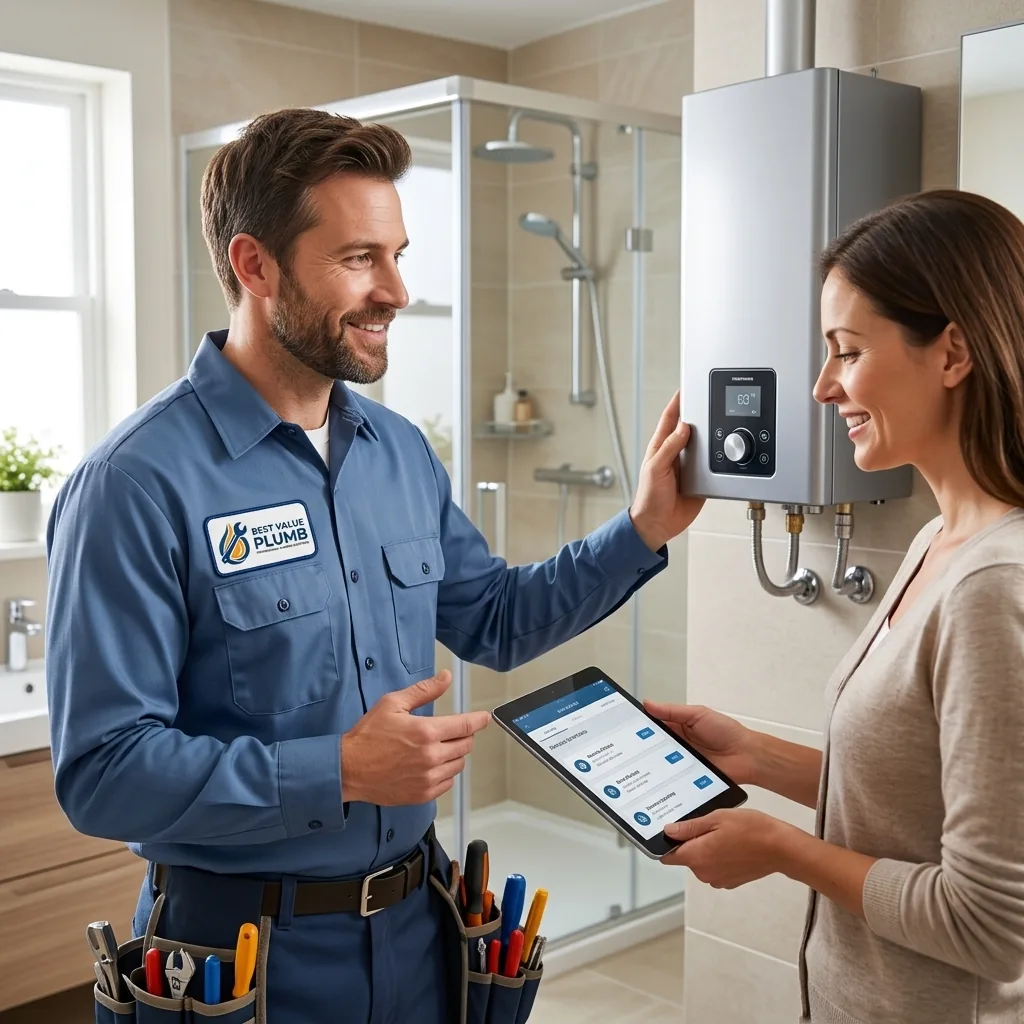
This fall plumbing maintenance checklist covers the season when plumbing problems go from minor annoyance to holiday-ruining emergency. The water heater that has been limping along all summer suddenly cannot keep up with a house full of Thanksgiving guests. The outdoor spigot you forgot to disconnect develops a slow leak inside the wall. The sump pump that has not run since spring sits seized when the first heavy autumn rain hits a Tennessee basement. Every one of these failures is preventable with about two hours of maintenance in October.
This checklist covers the eight fall plumbing tasks that matter most — for Florida homes dialing back irrigation and prepping for holiday guests, and for Tennessee homes getting basements and water heaters ready for cold weather. Work through them in order, check off each one, and head into the holidays knowing your plumbing can handle the extra showers, the extra dishes, and the extra flushes without complaint.
1. Flush and Inspect the Water Heater Before Holiday Demand
Your water heater works hardest between Thanksgiving and New Year's: back-to-back showers, constant dishwashing, and houseguests who all seem to shower at 7 a.m. Sediment is the enemy. In hard-water areas, a 40- or 50-gallon tank accumulates 1 to 2 inches of mineral sediment per year on the tank floor. That layer insulates the water from the burner or element, forcing longer heating cycles, raising energy bills 10 to 25 percent, and causing the popping and rumbling sounds of water boiling through sediment.
Fall is the ideal time for the annual flush:
- Turn off the power (electric) or set gas to pilot, and shut the cold-water inlet valve.
- Attach a garden hose to the drain valve and run it to a floor drain or outside — the water will be scalding at first.
- Open a hot-water tap upstairs to break the vacuum, then open the drain valve.
- Drain the full tank, then briefly open the cold inlet to stir up remaining sediment and drain again until the water runs clear.
- Close the drain valve, refill the tank completely, then restore power or gas.
While you are there, test the temperature-and-pressure (T&P) relief valve by lifting its lever briefly — water should discharge through the drain pipe, then stop when you release it. Check the anode rod every 2 to 3 years; if it is coated in calcium or worn to a thin wire, replace it ($30 to $60 in parts) to add years to the tank's life. Set the thermostat to 120°F — hot enough for comfort and dishwashing, cool enough to cut scalding risk and energy waste. If your unit is over 10 years old or the flush produces rusty water, read our water heater services page before it fails mid-holiday.
2. Winterize Outdoor Spigots and Hose Bibs
In Tennessee, this step is non-negotiable: a garden hose left connected to a spigot traps water in the pipe, which can freeze, expand, and burst the pipe inside the wall — a $200 repair that becomes a $2,000 water-damage claim. Disconnect every hose, drain it, and store it. If your home has interior shutoff valves for exterior spigots, close them and open the outside spigot to drain the line. Frost-free sillcocks (the long-stem type) are more forgiving but still require the hose to be disconnected.
In Florida, hard freezes are rare but not impossible — North Florida sees freezing nights most winters. Disconnecting hoses costs nothing and eliminates the most common freeze-burst scenario. Cover exposed spigots with $5 foam covers for the handful of nights temperatures dip near 32°F. Also walk the yard and check for spigots dripping at the handle or vacuum breaker; a spigot that drips all fall has been wasting water for months.
3. Test the Sump Pump (Tennessee Basements)
Fall rains are the sump pump's proving ground, and a pump that has sat idle all summer is the most likely to fail. Test it now, not during a storm:
- Pour 5 gallons of water into the sump pit until the float switch rises.
- The pump should activate within seconds and drain the pit in under a minute.
- Listen for grinding or rattling, which signals a worn impeller or debris in the intake.
- Confirm the discharge pipe outside is clear and directs water at least 6 to 10 feet from the foundation.
Clean debris from the pit, verify the check valve on the discharge line prevents backflow, and test any battery backup system by unplugging the primary pump — the backup should take over immediately. Battery backups last 3 to 5 years; if yours is older, replace the battery before storm season. A primary sump pump lasts 7 to 10 years; if yours is approaching that age, fall is the right time to replace it proactively ($150 to $400 for the pump, $300 to $600 installed) rather than discovering the failure at 2 a.m. during a downpour. See our guide to sump pump maintenance for Tennessee basements for the full routine.
4. Clear Gutters and Check Downspout Drainage
Gutters are plumbing too — they are the first stage of your home's drainage system. Clogged gutters overflow during fall rains, dumping hundreds of gallons of water directly against the foundation. That water finds its way into basements and crawl spaces, overwhelms sump pumps, and erodes soil around buried sewer lines.
Clean gutters and downspouts after most leaves have fallen (usually late October to mid-November depending on your area). Scoop debris, flush with a hose, and confirm water flows freely through the downspouts. Then check where downspouts discharge: each one should direct water at least 6 feet from the foundation, ideally 10. Short downspouts that dump at the foundation corner are one of the most common causes of wet basements we see. Extensions cost $10 to $25 each at any hardware store and take minutes to install. While you are up there, check that gutter hangers are tight — a gutter pulling away from the fascia dumps water behind it, straight into the wall cavity.
5. Test the Main Water Shutoff Valve
The main shutoff is the single most important valve in your house, and most homeowners have never touched it. Gate-style valves (round wheel handles) corrode in place after years without use; when you finally need one during a burst pipe, the handle snaps or the valve will not close fully. Fall is the time to exercise it.
Locate your main valve — usually where the water line enters the house, near the water heater, in the garage, or in a ground box near the street. Turn it fully off, then check that water stops at a faucet. Turn it back on slowly and confirm full pressure returns. If the valve is stiff, work it back and forth gently; if it leaks at the stem or will not fully close, have it replaced. A plumber can swap a failed gate valve for a quarter-turn ball valve ($150 to $300 installed) that will operate reliably for decades with a simple 90-degree turn. Tag the valve with a bright label and make sure every adult in the household knows where it is — in an emergency, the difference between a mop-up and a flood is often the 60 seconds it takes to find the shutoff.
6. Check Toilets and Slow Drains Before Guests Arrive
Holiday guests multiply toilet and drain usage overnight, and a toilet that runs occasionally or a shower that drains slowly under normal use will fail under guest-load conditions. Test each toilet with the dye test: drop food coloring or a dye tablet in the tank, wait 15 minutes without flushing, and check whether color appears in the bowl. Color in the bowl means the flapper is leaking — a $5 to $15 part that wastes up to 200 gallons a day and is replaced in 10 minutes.
Check fill valves too: if the tank takes more than 3 minutes to refill or the valve hisses constantly, replace it ($10 to $20). Wiggle each toilet at the base — any rocking means the wax ring seal is compromised and sewer gas or water is escaping; reset the toilet with a new wax ring before it becomes a subfloor repair. For slow drains, snake them now rather than during the holidays — a 25-foot hand auger costs $25 to $40 and clears most bathroom sink and tub clogs. Our drain cleaning services handle the deeper blockages that hand tools cannot reach.
7. Dial Back Irrigation (Florida Homes)
Florida lawns need significantly less water as temperatures drop and days shorten. Running the summer irrigation schedule through fall wastes thousands of gallons and keeps the soil saturated — which stresses your drain field if you are on septic and encourages root growth toward moist soil around sewer lines. Reduce sprinkler runtimes by 30 to 50 percent in October, and cut back to once a week or less by November in North Florida.
While adjusting the controller, walk each zone and look for geysers (broken heads), misting (clogged nozzles), and perpetually soggy spots that indicate a cracked lateral line. A single broken sprinkler head can waste 20 to 30 gallons per cycle. Check the rain sensor too — Florida code requires them on automatic systems, but dead sensors are common; pour a cup of water on the sensor and confirm the system shuts off. Cap the season by noting your winter settings so spring startup is a simple reversal.
8. Give the Septic System a Pre-Holiday Check
Holiday houseguests can double or triple a septic system's daily load — long showers, extra laundry, constant dishwasher runs — and a marginal system fails exactly when the house is full. If your tank has not been pumped in 3 to 5 years, schedule pumping before the holidays ($300 to $600 for a standard 1,000-gallon tank). It is the cheapest insurance against a backup during a houseful of guests.
Watch for warning signs now: slow drains throughout the house, gurgling toilets, sewage odors, or unusually lush grass over the drain field. Any of these mean the system is already stressed — call for an inspection before adding guest load. During the holidays, spread out laundry loads across days, remind guests that only toilet paper goes down toilets, and never pour cooking grease down the drain. A failed drain field costs $5,000 to $15,000 to replace; a little fall caution costs nothing.
Your Fall Plumbing Maintenance Checklist Action Plan
Block out one weekend and work top to bottom: water heater flush and T&P test, hose disconnection and spigot check, sump pump functional test, gutter cleaning with downspout extensions verified, main shutoff exercised and labeled, toilet dye tests and drain snaking, irrigation dialed back, and septic pumped if due. Total DIY cost for the full checklist is typically under $100 in parts — flappers, washers, downspout extensions, and foam spigot covers. The failures it prevents run from a $200 spigot repair to a $15,000 drain field replacement.
If any check reveals a problem beyond a simple part swap — a seized shutoff valve, a sump pump that will not activate, a water heater with rusty flush water — schedule professional service now while calendars are open. Contact us to book a fall plumbing inspection, and head into the holidays with one less thing to worry about.
Frequently Asked Questions
What are the most important fall plumbing maintenance tasks?
The highest-value tasks are flushing the water heater before holiday guest demand, disconnecting garden hoses from spigots, testing the sump pump with 5 gallons of water, exercising the main shutoff valve, and dye-testing toilets for flapper leaks. Together these take about two hours and prevent the most common cold-weather and holiday plumbing failures.
Should I flush my water heater in the fall?
Yes. Drain the full tank once a year to remove mineral sediment that reduces efficiency 10 to 25 percent and causes rumbling noises. Also test the T&P relief valve, check the anode rod every 2 to 3 years, and set the thermostat to 120°F. Do this before the holidays when hot-water demand peaks.
How do I winterize outdoor faucets?
Disconnect all garden hoses — a connected hose traps water that can freeze and burst the pipe inside the wall. In Tennessee, also close interior shutoff valves for exterior spigots and drain the lines. In Florida, disconnect hoses and add $5 foam covers for the occasional freezing night.
How do I test my sump pump before fall rains?
Pour 5 gallons of water into the pit and confirm the pump activates within seconds and empties the pit in under a minute. Listen for grinding noises, verify the discharge pipe is clear and directs water 6 to 10 feet from the foundation, and test the battery backup by unplugging the primary pump. Replace batteries older than 3 to 5 years.
How can I tell if my toilet flapper is leaking?
Drop food coloring in the tank, wait 15 minutes without flushing, and check for color in the bowl. Color means the flapper leaks — a $5 to $15 part you can replace in 10 minutes. A leaking flapper can waste up to 200 gallons of water per day.
Does my septic system need attention before the holidays?
If the tank has not been pumped in 3 to 5 years, schedule pumping ($300 to $600) before guests arrive, since holiday usage can double or triple the system's load. Watch for slow drains, gurgling toilets, odors, or lush grass over the drain field — all signs the system is already stressed.
Get a Professional Fall Plumbing Inspection
Our licensed plumbers will run through this entire checklist for you — water heater, sump pump, shutoffs, and all — before the holiday rush. Book your fall inspection today.
📞 Call +1 (850) 904-1147