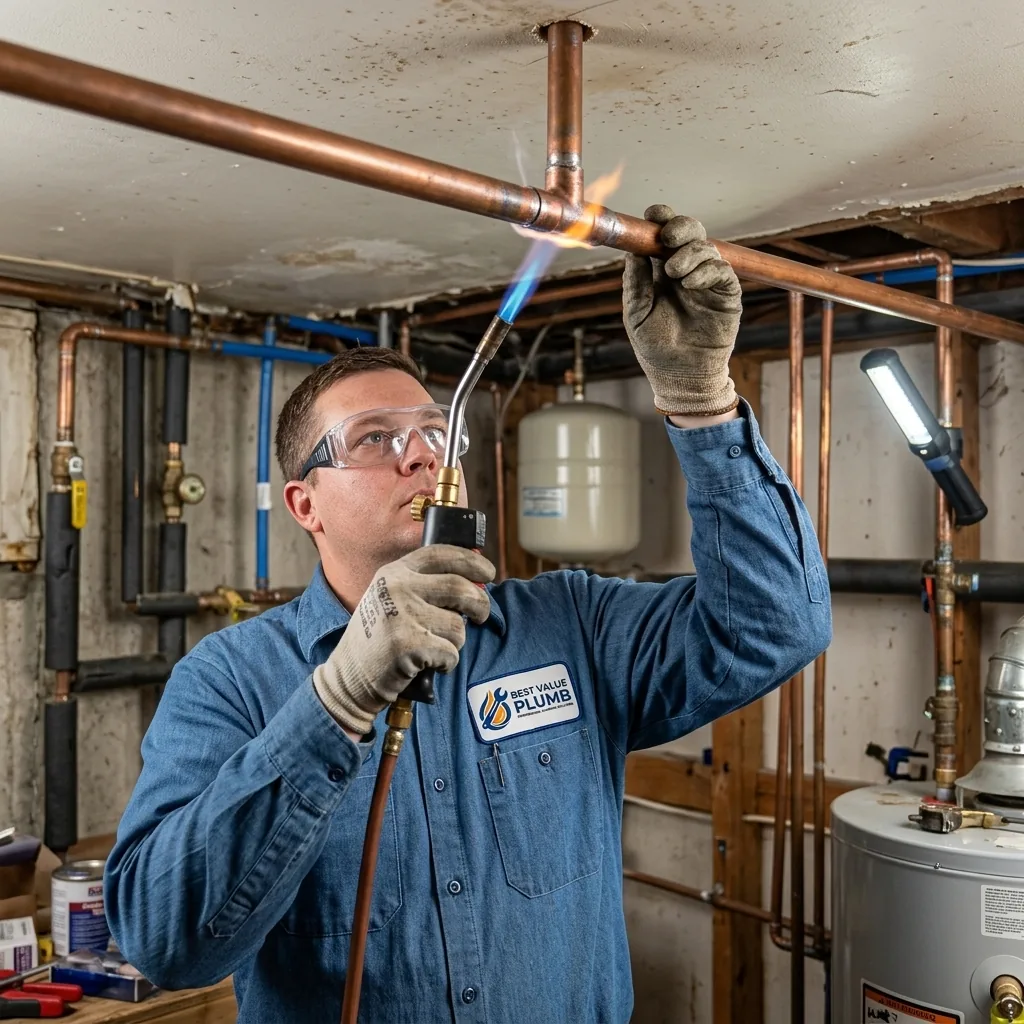
A winter vacation plumbing shutoff is what stands between a relaxing trip and a flooded house: you are locking the front door for a two-week trip in January, and the thermostat is set to 55. Everything feels handled — until you picture a supply line splitting on day three, spraying water at 8 gallons a minute into an empty house for eleven days. That is roughly 128,000 gallons, or a five-figure insurance claim and months of repairs. A burst pipe in an unoccupied home is one of the most expensive plumbing failures there is, precisely because nobody is there to shut the water off.
The good news: preventing it takes about an hour and costs almost nothing. This guide gives you the complete winter-vacation plumbing shutdown procedure — main shutoff, draining the lines, water heater settings, toilet and trap protection, and the backup measures (a human checker, a $50 leak detector) that cover what the shutdown cannot. It also covers the important difference between leaving a Tennessee home in freezing weather and leaving a Florida home as a snowbird, because the two situations demand different levels of preparation.
Why an Empty House Is a Burst Pipe's Best Friend
Three things make a vacant home especially vulnerable. First, nobody opens a faucet, so water sits motionless in the pipes — and still water freezes faster and more completely than moving water. Second, nobody notices the early signs: the faint hissing of a pinhole leak, the damp spot spreading behind a toilet, the furnace hiccup that drops the house to 40 degrees. Third, a small leak runs for days instead of minutes. A supply line that splits on a Tuesday and is discovered the following Sunday has been flowing for 120 hours. At even 5 gallons a minute, that is 36,000 gallons — enough to collapse ceilings, destroy flooring on two levels, and grow mold through wall cavities. Insurance typically covers sudden pipe bursts but often excludes or limits damage from leaks that ran for weeks unnoticed, and policies frequently have vacancy clauses that reduce coverage if a home sits empty for 30 to 60 days without precautions. Shutting down the plumbing properly is both damage prevention and insurance protection.
Winter Vacation Plumbing Shutoff
Do this the day before you leave, not the morning of — you want time to confirm everything worked. Budget 45 to 60 minutes.
Step 1: Shut off the main water supply
Locate your main shutoff valve — usually in the basement, crawlspace, utility room, or a meter box at the curb — and close it fully. If it is an old gate valve (round wheel handle), turn it clockwise until it stops, then back it off a quarter turn to keep it from seizing. Better yet, if you have been meaning to upgrade to a quarter-turn ball valve (lever handle, 90-degree turn), do it before vacation season — ball valves are far more reliable after years of sitting untouched. Test the shutoff by opening a faucet: flow should stop within a minute as the lines depressurize.
Step 2: Drain the lines down
With the main closed, open the lowest faucets in the house (basement laundry tub, outdoor spigots) and the highest faucets (upstairs bathrooms) to let gravity drain the system. Flush every toilet once to empty the tanks — the bowls will retain some water, which is fine and actually needed to keep the trap seal. Leave the faucets open while you are gone; if a small amount of residual water does freeze, open faucets give it room to expand instead of splitting the pipe. This drain-down is the single most effective freeze protection you have, and it costs nothing.
Step 3: Set the water heater
You have three options, and the right one depends on your trip length and climate:
- Vacation mode (best for most trips). Most modern water heaters have a VAC or vacation setting that holds the tank at around 50°F — warm enough to prevent freezing and bacterial growth, cool enough to save energy. Use this for any trip under a month.
- Turn it off completely. For trips of a month or more, shutting the heater down saves the most energy. Turn gas units to pilot or off; flip the breaker for electric units. Important: if you turned off the main water and drained the lines, the tank may be partially empty — never let a water heater fire with an empty or low tank, as it can burn out elements or crack the tank in under 30 minutes.
- Leave it running normally. Only makes sense for very short trips in mild weather, and it wastes energy. Not recommended for winter travel.
When you return, if you shut the heater down, refill the tank completely before restoring power or gas — open a hot-water tap until water flows steadily with no sputtering, which confirms the tank is full. For more on keeping your unit healthy year-round, see our water heater maintenance tips.
Step 4: Protect toilets, traps, and drains
In Tennessee freeze zones, the water sitting in toilet bowls, toilet tanks, and sink, tub, and shower P-traps can freeze and crack porcelain or split trap fittings. After draining the lines and flushing the tanks, pour about a quart of non-toxic RV antifreeze (propylene glycol, the pink kind — about $5 to $8 a gallon) into each toilet bowl and each drain. Do not use automotive antifreeze — it is toxic and illegal to flush into septic or sewer systems. The RV antifreeze lowers the freeze point of the standing water without harming plumbing or septic systems. In Florida, where hard freezes are rare, this step is optional — but it is cheap insurance during an unusual cold snap.
Step 5: Handle the extras
Turn off the water supply valves to the washing machine and dishwasher, and if your refrigerator has an ice maker or water dispenser, shut off its supply line too — those thin plastic lines are among the first things to split in a freeze. If you have a water softener or whole-house filter, check the manufacturer's vacation instructions; some units should be put in bypass. Set the thermostat no lower than 55°F — going lower saves little on heating and risks frozen pipes in exterior walls. Open the cabinet doors under kitchen and bathroom sinks on exterior walls so warm air reaches the pipes. And if your home has a sump pump, make sure it is plugged in, the pit is clear, and the discharge line is not frozen shut — a dead sump pump during a winter storm floods basements whether you are home or not — test yours before you leave.
Tennessee Freeze Risk vs. Florida Snowbird: Different Playbooks
Where your house sits changes the preparation significantly.
Leaving a Tennessee home in winter
East Tennessee sees overnight lows in the teens and single digits most winters, with occasional multi-day stretches below freezing. That is genuine burst-pipe territory, especially for pipes in crawlspaces, exterior walls, garages, and attics. Do the full shutdown above — main off, lines drained, RV antifreeze in traps and toilets, heat at 55°F, sink cabinets open. If your home has a history of frozen pipes, consider having the vulnerable sections insulated or heat-taped before you leave; our frozen pipe prevention guide covers the options. A smart thermostat that alerts your phone if the house drops below 50°F is a $100 to $200 investment that pays for itself the first time your furnace hiccups while you are away.
Leaving a Florida home as a snowbird
Florida's freeze risk is lower but not zero — hard freezes do reach the Panhandle and even South Florida every few years, and an unoccupied home with no heat running is exactly where they do damage. Florida snowbirds should still shut off the main water (the number-one protection against all leaks, not just freezes), drain the lines, and set the water heater to vacation mode. The bigger Florida-specific risks during a long absence are different: humidity and mold growth in a sealed, un-air-conditioned house, and hurricane-season storm damage. If you leave for the summer, keep the air conditioning at 78 to 80°F with a humidistat set around 55 to 60 percent relative humidity to prevent mold — shutting the AC off entirely in a Florida summer is an invitation to mold in closets, behind furniture, and inside wall cavities. Our hurricane season plumbing checklist for Florida covers storm-specific preparation.
Backup Measures: The Checker and the Detectors
The shutdown handles the plumbing; these two measures handle everything the shutdown cannot.
Have a human check in
Ask a trusted neighbor, friend, or family member to walk through the house every 3 to 4 days. Give them a simple checklist: is the house warm (thermostat reading above 55°F)? Any water on floors, especially near the water heater, washing machine, and under sinks? Any unusual sounds (running water when nothing is on)? Any musty smell? Leave them the number of your plumber and your water utility's emergency line, plus the location of the main shutoff in case they find active water. Many insurance vacancy clauses specifically require periodic checks — a documented visit log protects your coverage.
Install smart leak detectors
Wi-Fi water leak detectors cost $50 to $150 for a multi-pack from major brands, sit on the floor near the water heater, washing machine, under sinks, and behind toilets, and send an instant phone alert when they sense water. For about $400 to $700, an automatic shutoff valve installed on the main line will close the water supply itself when a paired sensor detects a leak — the closest thing to having someone home around the clock. Place at least one sensor in the basement or lowest point of the house, one at the water heater, and one under the kitchen sink; those three locations account for the large majority of residential leak damage. Batteries last 1 to 2 years — replace them before vacation season.
The Return: Bringing the House Back Online
Coming home to a dry house is the goal; here is how to restart without creating the problem you just prevented:
- Check the thermostat reading and walk every room for signs of water before turning anything on. Look at ceilings for stains, sniff for mustiness, and check under sinks.
- Close all the faucets you left open during drain-down.
- Turn the main water back on slowly — a quarter turn, wait two minutes, then full. Opening it fast sends a pressure hammer through empty pipes that can loosen old fittings.
- Open faucets one at a time, starting with the lowest, and let each run until the sputtering stops and the water runs clear. Some discoloration is normal after a drain-down; it should clear within a few minutes.
- Refill the water heater tank completely (hot tap running steady, no air) before restoring power or gas to the unit.
- Flush each toilet twice to clear the RV antifreeze, and run the dishwasher and washing machine through an empty cycle before normal use.
If anything looks wrong — water where it should not be, a faucet that never stops sputtering, no hot water after the tank refills — shut the main back off and call for leak repair before the problem gets a head start. And if you are planning this routine as part of a seasonal habit, our annual plumbing inspection checklist pairs well with the vacation shutdown for full-year coverage.
Quick-Reference Vacation Plumbing Checklist
- Shut off the main water valve; verify by opening a faucet
- Drain the lines: open lowest and highest faucets, flush all toilets, leave faucets open
- Set water heater to vacation mode (or off for trips over a month; never fire an empty tank)
- Pour RV antifreeze (propylene glycol, pink) into toilet bowls and all drain traps in freeze zones
- Close supply valves to washing machine, dishwasher, and refrigerator ice maker
- Thermostat at 55°F minimum; open sink cabinets on exterior walls
- Confirm sump pump is plugged in and the discharge is clear
- Place smart leak detectors at the water heater, washing machine, under sinks, and lowest floor point
- Arrange a checker every 3 to 4 days with the plumber's number and shutoff location
- On return: inspect first, reopen the main slowly, refill the water heater before restoring power, flush lines until clear
An hour of preparation before you leave beats a month of repairs after you return. If you would like a professional once-over before a long trip — shutoff valve test, water heater check, vulnerable-pipe insulation — contact us to schedule a pre-vacation plumbing inspection.
Frequently Asked Questions
What is the proper way to shut off plumbing before a winter vacation?
Shut off the main water valve, open the lowest and highest faucets to drain the lines, flush all toilets, and leave the faucets open. Set the water heater to vacation mode (or off for trips over a month), pour RV antifreeze into toilet bowls and drain traps in freeze zones, close supply valves to the washer, dishwasher, and ice maker, and keep the thermostat at 55°F or higher.
Vacation mode or off: what should I do with my water heater?
Vacation mode (usually marked VAC) holds the tank around 50°F, preventing freezing and bacterial growth while saving energy — it is the best choice for trips under a month. For trips longer than a month, shutting the heater off entirely saves more. Never restore power or gas until the tank is completely refilled, or you can burn out the elements or crack the tank in under 30 minutes.
Do I need antifreeze in my toilets and drains before leaving?
In Tennessee and other freeze zones, yes. Pour about a quart of non-toxic RV antifreeze (propylene glycol, the pink kind, $5 to $8 a gallon) into each toilet bowl and each sink, tub, and shower drain. It lowers the freeze point of the standing water in traps without harming plumbing or septic systems. Never use automotive antifreeze — it is toxic.
How do I prepare my Tennessee home differently from Florida?
Do the full shutdown: main water off, lines drained, RV antifreeze in traps and toilets, heat at 55°F minimum, and sink cabinets open on exterior walls. Tennessee winters regularly drop into the teens, which is genuine burst-pipe territory. A smart thermostat that alerts your phone if the house drops below 50°F ($100 to $200) is cheap insurance against a furnace failure while you are away.
How often should someone check on my house while I am away?
Ask someone to walk through every 3 to 4 days checking that the house is warm, looking for water near the water heater, washer, and under sinks, and listening for running water. Leave them your plumber's number and the main shutoff location. Many insurance vacancy clauses require periodic checks, so keep a simple visit log.
Are smart water leak detectors worth it for vacation protection?
Wi-Fi leak detectors cost $50 to $150 for a multi-pack and send instant phone alerts when they sense water — place them at the water heater, washing machine, under sinks, and the lowest floor point. For $400 to $700, an automatic shutoff valve on the main line will close the water supply itself when a sensor detects a leak. Replace detector batteries every 1 to 2 years.
Leaving Town This Winter? Get a Pre-Vacation Check.
Heading out for the holidays or the season? The local pros we connect you with will test your shutoff valves, inspect your water heater, and freeze-proof vulnerable pipes before you go — so you come home to a dry house.
📞 Call +1 (850) 904-1147